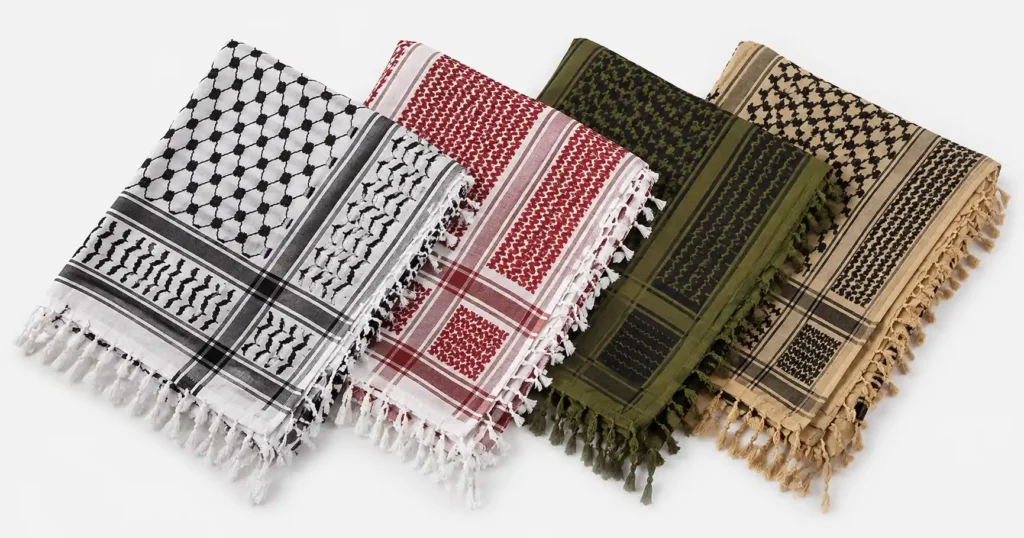
Tactical shemagh keffiyeh scarves may look like simple square scarves, but for bulk buyers they are highly specification-driven products. Fabric composition, weave density, scarf size, pattern style, tassel finishing, color matching, logo method and packaging all affect the final price and buyer satisfaction.
For importers, tactical gear brands, outdoor distributors, Middle East market suppliers and private label buyers, the key question is not only whether a scarf looks authentic. The more useful question is: which shemagh or keffiyeh specification fits your target market, price point and end-use scenario?
This guide explains how to compare tactical shemagh keffiyeh scarves before placing a wholesale or OEM order. If you are already preparing a sourcing project, Zennison’s tactical shemagh keffiyeh wholesale page gives a direct overview of bulk supply and customization options.
Quick Answer: What Should Bulk Buyers Check First?
For most tactical shemagh keffiyeh orders, buyers should confirm six specifications first: fabric, size, weave or pattern method, edge finishing, color combination and packaging. These details decide whether the scarf is suitable for tactical retail, outdoor kits, Middle East traditional wear, promotional programs or private label collections.
A practical baseline specification is:
- Fabric: cotton, polyester-cotton, polyester, viscose-like fabric or wool blend depending on target market.
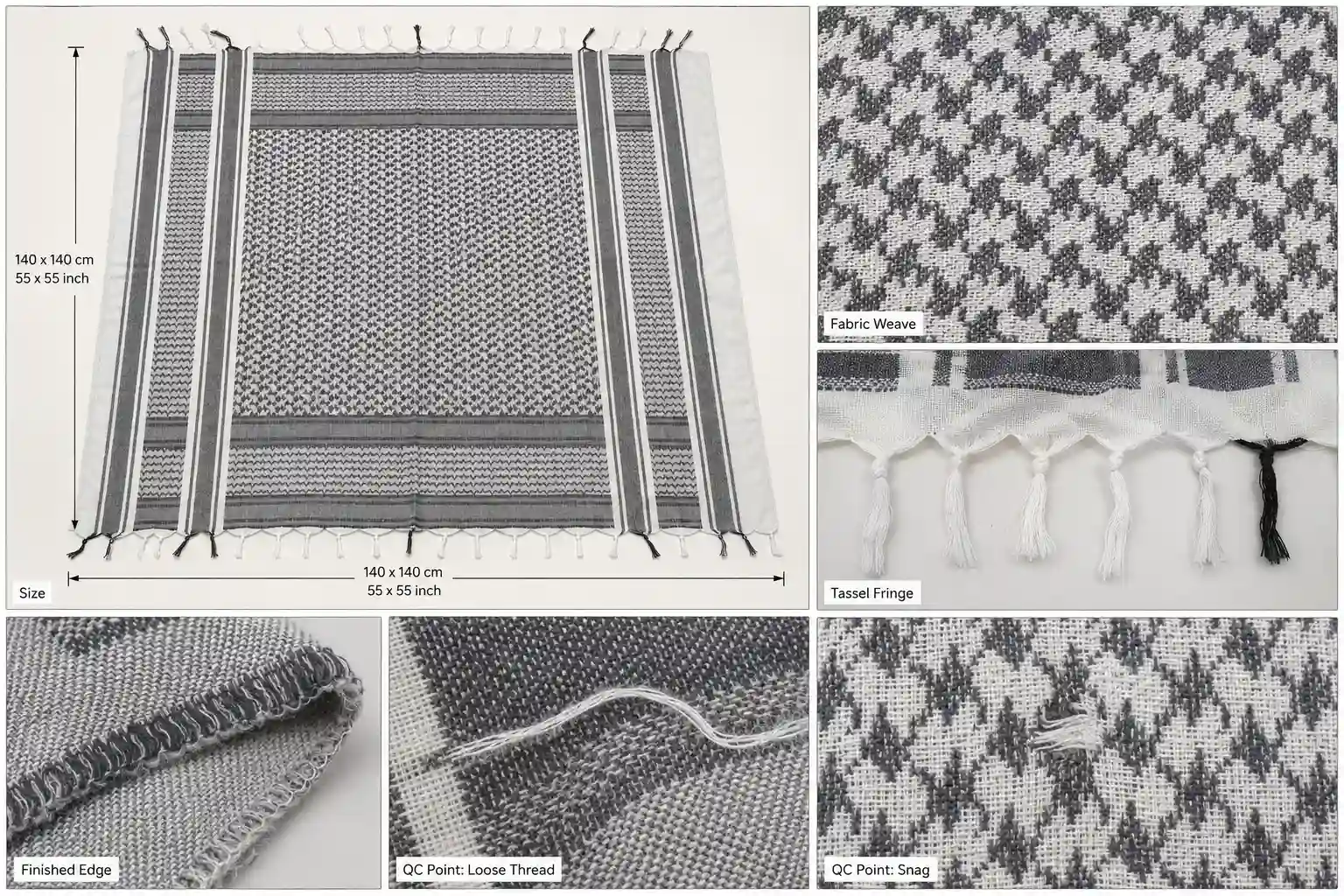
- Size: common options include 110 x 110 cm, 125 x 125 cm, 140 x 140 cm, 55 x 55 inch and 58 x 58 inch.
- Weight: many styles fall around 160-230 g depending on fabric and tassel structure.
- Pattern: classic fishnet, wave, grid, jacquard, printed or customized pattern.
- Edge: tassel edge, sewn edge, overlocked edge or custom finish.
- OEM: custom color, logo, woven label, packaging, scarf and agal set, or private label gift box.
1. What Is a Tactical Shemagh Keffiyeh?
A shemagh, keffiyeh or Arabic scarf is a square scarf commonly used for sun protection, dust protection, warmth, styling and traditional headwear. In outdoor and tactical markets, the scarf is often positioned as a versatile field accessory. In Middle East markets, it may also be part of traditional dress when paired with an agal.
The names are sometimes used differently by region. For B2B sourcing, it is more important to define the product by specification than by name alone. A buyer should clarify whether the order is for a tactical shemagh scarf, a traditional keffiyeh, a ghutrah-style scarf, or a scarf and agal set.
This matters because each market may expect a different fabric handfeel, size, pattern, color and packaging style.
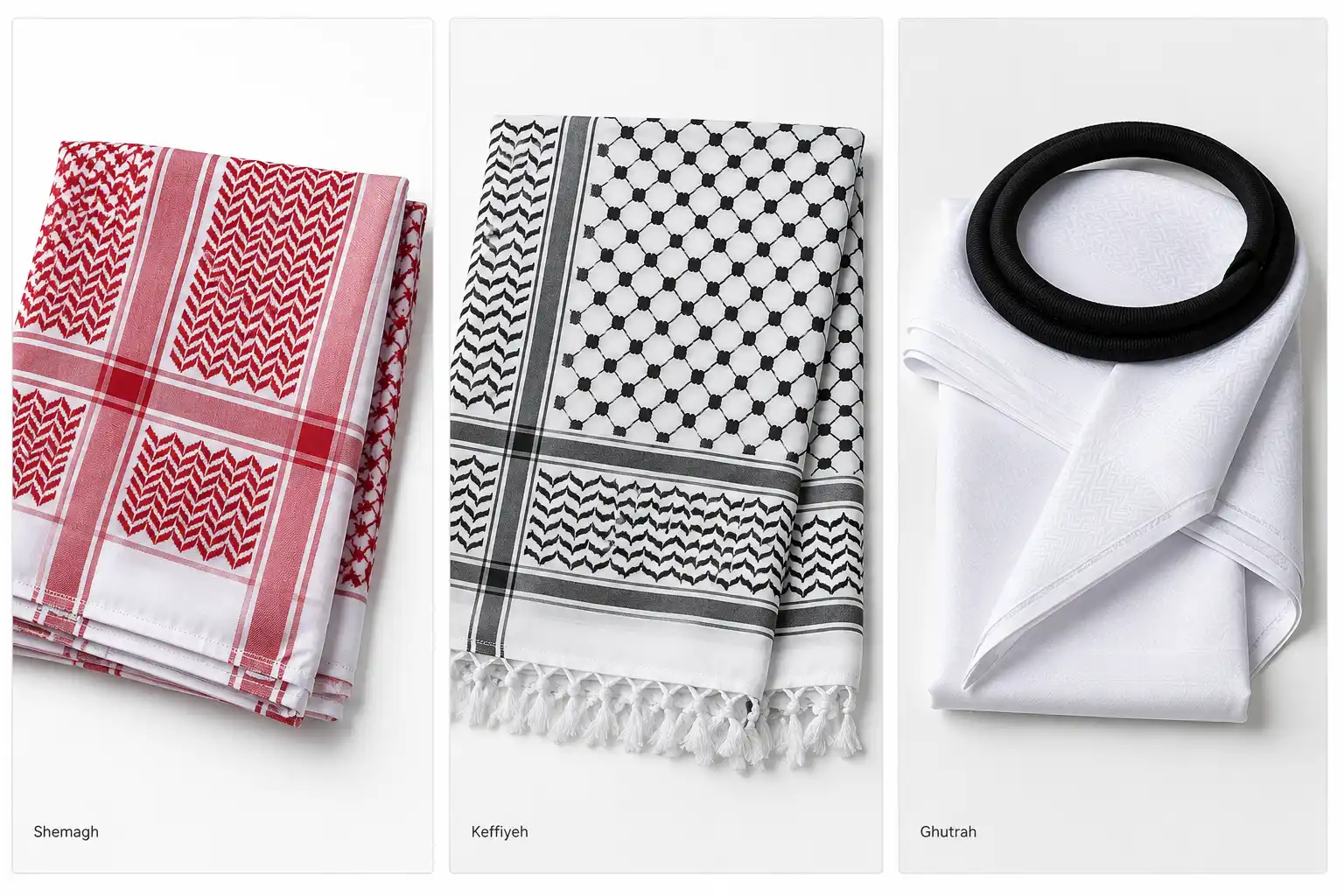
2. Shemagh, Keffiyeh and Ghutrah: How Buyers Should Compare Them
Many buyers use the terms shemagh, keffiyeh and ghutrah interchangeably, but in procurement it is better to separate them by intended market and product details.
| Product type | Common features | Best use case | Buyer notes |
|---|---|---|---|
| Tactical shemagh scarf | Often 110 x 110 cm or similar, cotton or poly-cotton, tactical colors | Outdoor, tactical gear, camping and field accessories | Focus on softness, durability, breathable feel and retail packaging |
| Keffiyeh scarf | Classic fishnet or wave pattern, black-white or red-white combinations | Traditional, cultural, fashion and regional markets | Pattern accuracy, color consistency and edge finish are important |
| Ghutrah-style scarf | Often larger size, such as 140 x 140 cm or 55 x 55 inch | Middle East supply, formal headwear and scarf + agal sets | Size, drape, fabric touch and agal compatibility need confirmation |
| Custom printed scarf | Logo, event artwork, private label pattern or brand color | Promotional, sports, private label and campaign orders | Artwork method and color fastness should be checked before production |
| Scarf and agal set | Keffiyeh or ghutrah paired with black or custom-color agal | Middle East retail, gift sets and traditional wear supply | Agal size, color, weight and packaging should match the scarf style |
3. Fabric Choice: What Changes the Quality and Price?
Fabric is one of the biggest cost and quality drivers for a tactical shemagh keffiyeh order. The same pattern can feel very different if the yarn, blend or weave density changes.
Common fabric options include:
- 100% cotton: soft, breathable and familiar for classic shemagh buyers, but usually more sensitive to shrinkage and price changes.
- Polyester-cotton: often used for cost control, durability and faster drying in outdoor or tactical programs.
- Polyester: suitable for budget or promotional programs when low cost and color stability are priorities.
- Viscose-like or soft-touch fabric: useful for fashion or comfort-driven markets.
- Wool blend: suitable for colder-weather positioning or traditional markets that expect a heavier handfeel.
For a sourcing project, do not approve a scarf only by pattern photo. Ask for actual fabric handfeel, weight, shrinkage behavior and whether the fabric matches the expected retail market.
4. Size and Weight: Why 140 cm, 55 Inch and 110 cm Matter
Size is one of the easiest specifications to misunderstand. A tactical scarf used as a neck wrap may not need the same size as a ghutrah-style head scarf used with an agal.
Common sizes include:
- 110 x 110 cm for compact tactical and outdoor scarf use.
- 125 x 125 cm for classic keffiyeh-style scarf programs.
- 140 x 140 cm or 55 x 55 inch for larger ghutrah-style or Middle East market use.
- 58 x 58 inch or custom size for specific regional requirements.
Weight also matters. Many styles may fall around 160-230 g, but the final weight depends on fabric, yarn, edge tassels and finishing. A heavier scarf can feel more substantial, while a lighter scarf may be easier to pack and more comfortable in hot weather.
5. Pattern Options: Fishnet, Wave, Grid and Tactical Colors
The pattern is often the first thing customers notice, but it is not only a visual decision. Pattern accuracy, color contrast and repeat consistency affect the final product impression.
Common pattern directions include:
- Classic fishnet keffiyeh pattern.
- Wave pattern shemagh scarf.
- Grid-style ghutrah pattern.
- Black-white, red-white and olive tactical colorways.
- Khaki, navy, camouflage-inspired or custom brand color combinations.
- Logo-integrated jacquard or printed artwork.
For tactical buyers, black, olive, khaki, gray and coyote-style tones often fit field and outdoor product lines. For Middle East or traditional markets, red-white, black-white and plain white may be more important.
6. Edge Finishing and Tassels: Small Details That Affect Buyer Perception
Edge finishing is a small detail that strongly affects perceived quality. Buyers should confirm whether the scarf uses tassel edges, sewn edges, overlocked edges, scattered fringe or a custom edge finish.
Typical points to check include:
- Whether tassels are even and secure.
- Whether edges are sewn or left with fringe.
- Whether loose threads can be trimmed without damaging the scarf.
- Whether the scarf has skipped threads, broken yarns or fabric holes.
- Whether the pattern remains centered after cutting and finishing.
Some loose thread issues can be repaired by trimming or reworking, but fabric damage is usually not repairable. For bulk orders, edge and surface inspection should be included in the QC checklist.
7. OEM Shemagh Scarf Customization Options
OEM shemagh scarf projects can be customized in several ways. The right method depends on the order quantity, fabric, pattern style and brand positioning.
OEM Shemagh Scarf Customization Checklist
Before requesting a quotation, prepare the following details:
- Target product type: tactical shemagh, keffiyeh, ghutrah-style scarf, printed scarf or scarf and agal set.
- Fabric composition: cotton, poly-cotton, polyester, soft-touch fabric, wool blend or custom.
- Size: 110 x 110 cm, 125 x 125 cm, 140 x 140 cm, 55 x 55 inch, 58 x 58 inch or custom.
- Weight target: lightweight, standard or heavier premium handfeel.
- Pattern: fishnet, wave, grid, jacquard, printed artwork or custom pattern.
- Color: black-white, red-white, olive, khaki, navy, camouflage-inspired or Pantone custom color.
- Edge finish: tassel, sewn edge, overlock, scattered fringe or custom finish.
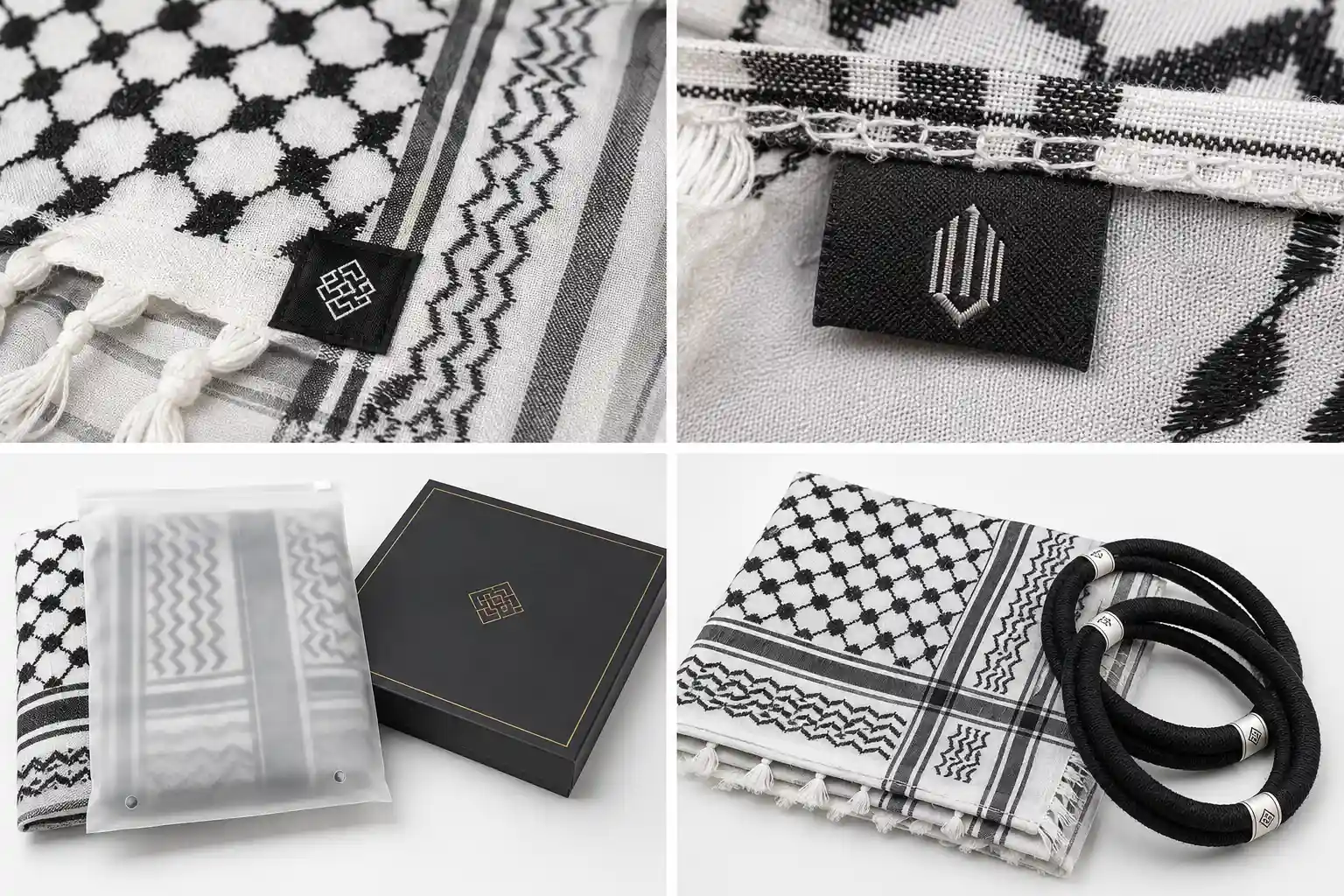
- Logo method: embroidery, screen print, woven label, jacquard logo or integrated pattern.
- Packaging: polybag, custom bag, paper band, gift box, scarf + agal set or carton label.
- QC requirements: size tolerance, color tolerance, yarn defects, edge finishing and packaging inspection.
A clear specification helps avoid comparing two quotations that look similar but are based on different fabric, size, weight and packaging assumptions.
8. Logo and Private Label Options
Logo customization can be simple or highly integrated. For budget programs, a woven label, hangtag or packaging sticker may be enough. For higher-value programs, buyers may request embroidery, screen printing or a logo woven into the pattern.
Common logo methods include:
- Embroidery on suitable fabric density.
- Screen printing or plate printing for artwork or event designs.
- Woven label sewn to the scarf edge.
- Jacquard logo integrated with the scarf pattern.
- Private label packaging with brand card, paper band or gift box.
For a tactical or outdoor brand, logo placement should not make the scarf uncomfortable to wear. For a promotional scarf, artwork visibility may be more important than field comfort.
9. Agal and Keffiyeh Set Options
For Middle East market buyers, the agal can be just as important as the scarf. It should match the scarf style, target user and packaging method.
Common agal specifications include:
- Material: polyester, wool blend or custom material.
- Color: classic black, white or custom colors.
- Size: common sizes around 56 cm or 57 cm, with child and larger sizes available depending on project needs.
- Style: standard agal, tassel agal, no-tassel style or premium style.
- Packaging: scarf and agal packed together or separately.
If the order is for scarf and agal sets, confirm the scarf size and agal size together. A mismatch can make the set less suitable for the target market even if both items look acceptable separately.
10. Packaging Options for Wholesale Shemagh Orders
Packaging depends on the sales channel. A tactical distributor may prefer simple polybag packing for efficient warehousing, while a gift or Middle East retail program may need a box, paper band or scarf and agal set packaging.
Common packaging options include:
- Neutral polybag.
- Custom printed polybag.
- Paper band or brand card.
- Custom gift box.
- Scarf packed alone.
- Scarf and agal packed together.
- Carton label and private label shipping marks.
Packaging should be discussed early because it affects cost, carton size, barcode labeling and final retail presentation.
11. Quality Control Points for Bulk Orders
For bulk tactical shemagh keffiyeh orders, QC should focus on size, fabric, pattern, edge finishing, color and packaging.
Recommended QC checks include:
- Size measurement after finishing.
- Fabric weight and handfeel comparison against approved sample.
- Color consistency across production batches.
- Pattern alignment and border symmetry.
- Tassel length and edge finishing consistency.
- Loose thread, skipped thread and fabric damage inspection.
- Logo placement and logo durability.
- Packaging content check, especially for scarf and agal sets.
- Carton marking and packing quantity confirmation.
For private label orders, buyers should approve a pre-production sample before mass production. This sample should be used as the reference for color, fabric touch, size, pattern and packaging.
12. Common Buying Mistakes
The most common mistake is comparing shemagh prices without comparing specifications. A 110 x 110 cm tactical scarf, a 140 x 140 cm ghutrah-style scarf and a scarf + agal gift set are not the same product.
Other common mistakes include:
- Choosing a pattern only by photo without checking fabric handfeel.
- Ignoring size and weight differences.
- Not confirming edge tassel style before production.
- Using a logo method that does not suit the fabric density.
- Forgetting to define packaging before quotation.
- Comparing cotton and polyester scarves as if they have the same cost structure.
- Not checking whether the agal size matches the scarf and target market.
For B2B buyers, the goal is not simply to choose the lowest unit price. The goal is to choose a scarf specification that matches customer expectations, retail price and repeat-order potential.
Conclusion
A tactical shemagh keffiyeh is a small product with many sourcing details. Fabric, size, pattern, tassels, logo method, agal matching and packaging all affect the final result.
A good supplier should help buyers compare these details clearly before sampling and production. If you are preparing a wholesale or OEM scarf project, define your fabric, size, pattern, color, edge finish and packaging requirements before asking for a quote.
Zennison supplies tactical shemagh scarves, keffiyeh scarves, ghutrah-style scarves, agal sets and OEM packaging options for bulk buyers. Visit our tactical shemagh keffiyeh wholesale page to explore available options or request a customized quotation.
FAQ
What is the difference between a shemagh and a keffiyeh?
The terms are often used differently by region and market. In B2B sourcing, it is better to define the product by fabric, size, pattern, color and intended use. Tactical buyers often use “shemagh”, while traditional or regional markets may use “keffiyeh” or “ghutrah”.
What fabric is best for tactical shemagh scarves?
Cotton is breathable and familiar for classic shemagh buyers, while polyester-cotton can offer better cost control and durability. The best fabric depends on the target market, price point and expected handfeel.
What size is common for bulk shemagh or keffiyeh orders?
Common sizes include 110 x 110 cm, 125 x 125 cm, 140 x 140 cm, 55 x 55 inch and 58 x 58 inch. Larger sizes are often used for ghutrah-style or Middle East market scarves, while smaller sizes may fit tactical neck-wrap use.
Can shemagh scarves be customized with logo and packaging?
Yes. Customization options can include custom color, pattern, embroidery, screen printing, woven label, jacquard logo, hangtag, paper band, polybag, gift box and private label carton marking.
Can Zennison supply agal with keffiyeh scarves?
Yes. Agal options can be supplied together with keffiyeh or ghutrah-style scarves. Buyers should confirm agal material, color, size, style and whether the scarf and agal need to be packed together.
What should buyers confirm before bulk production?
Buyers should confirm fabric composition, size, weight, pattern, color, edge finishing, logo method, packaging, size tolerance and QC requirements. A pre-production sample is recommended before mass production.