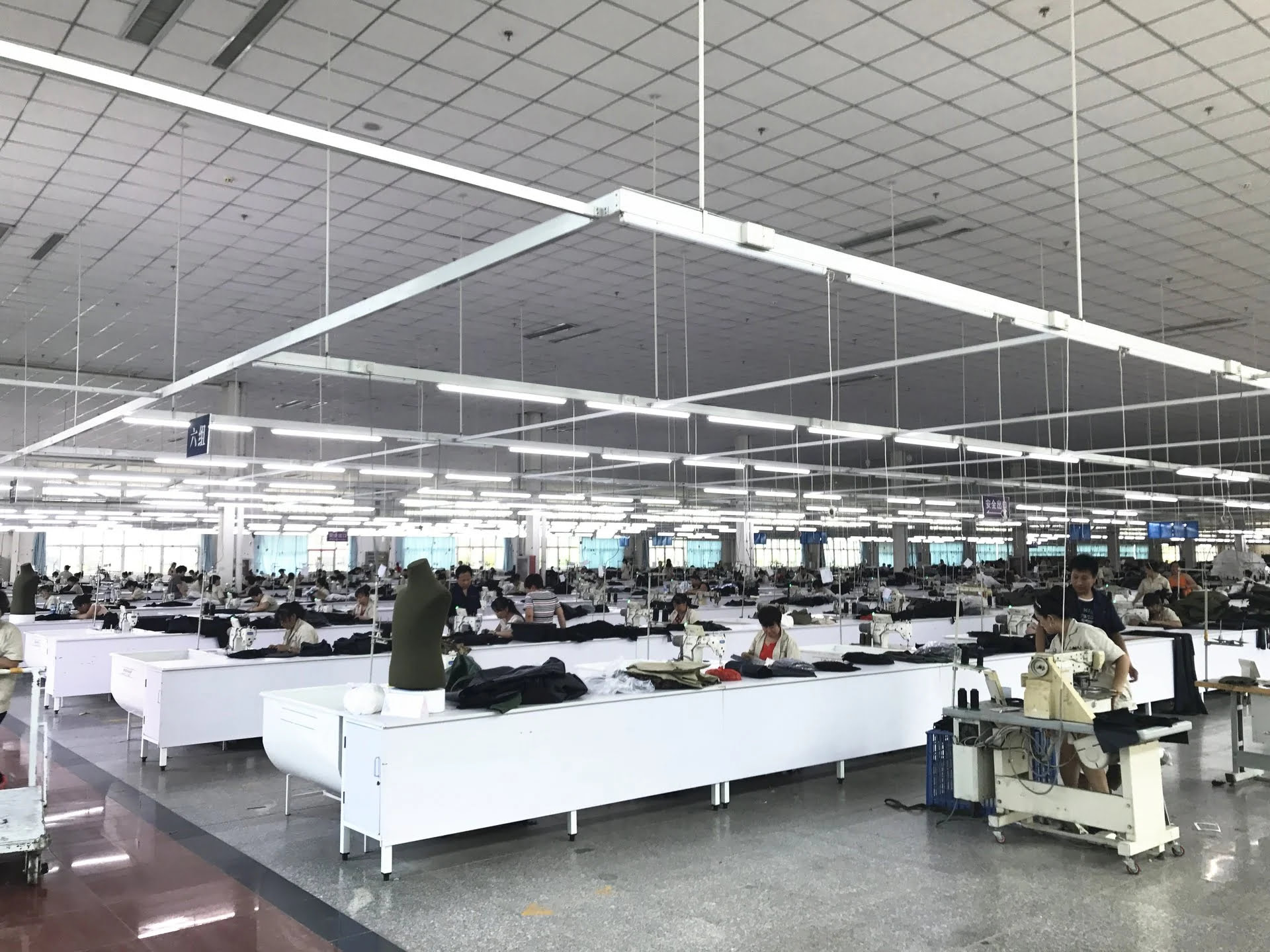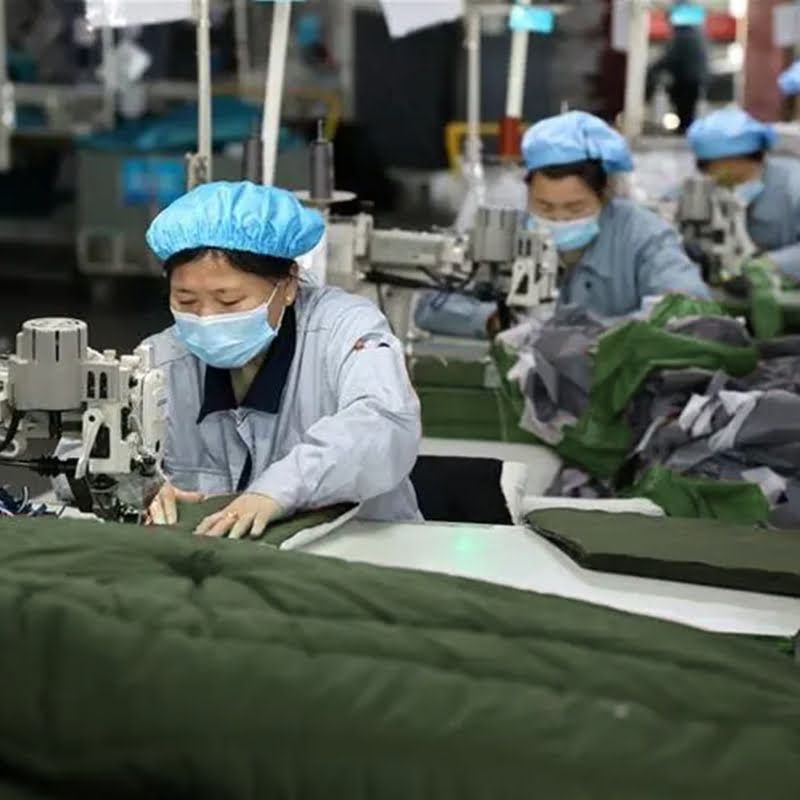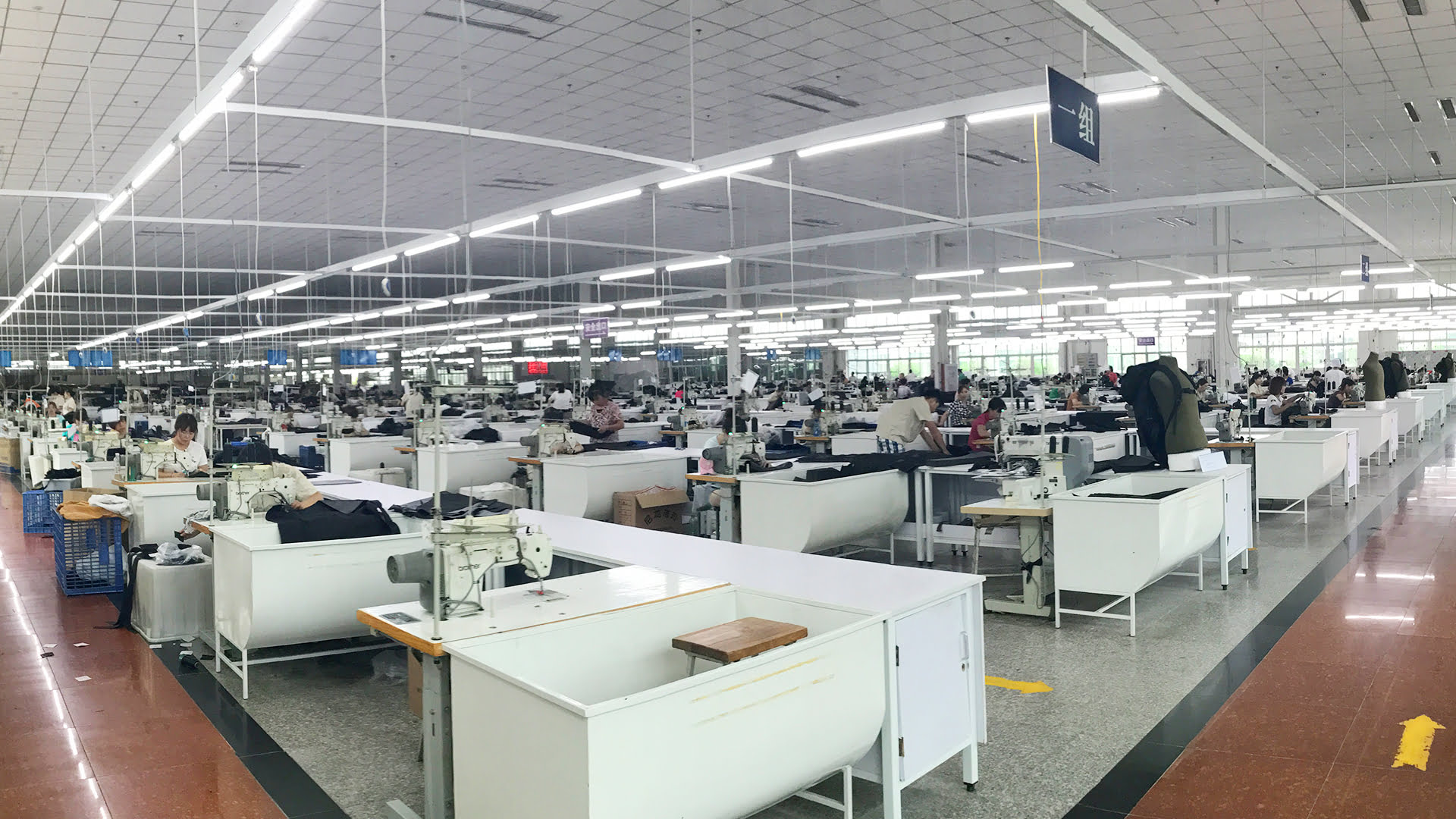
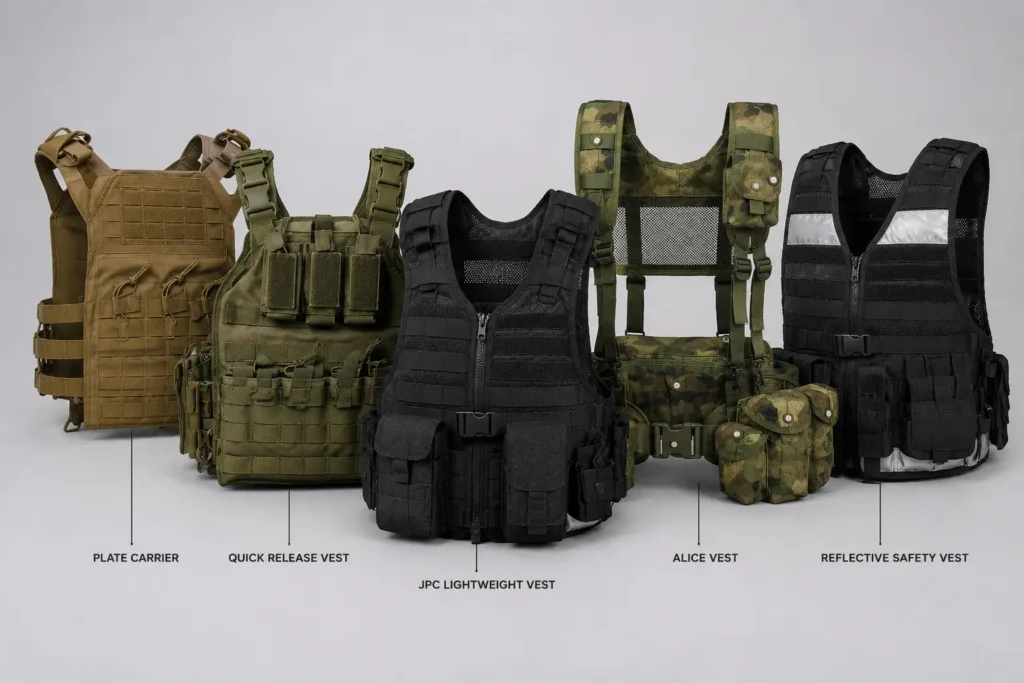
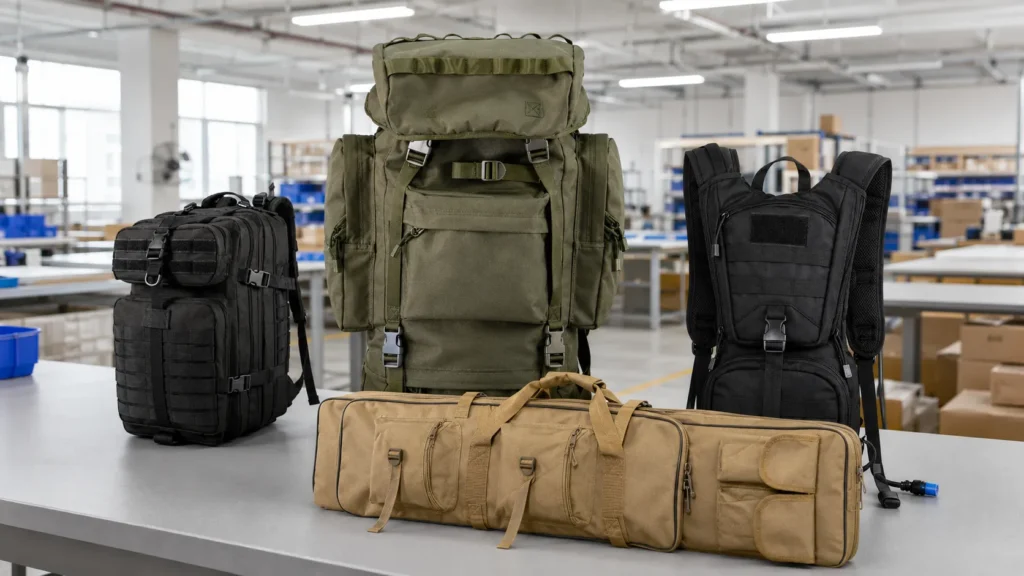
A tactical uniform project can go wrong before the first sample is sewn if the buyer does not define the uniform system clearly. BDU uniforms, ACU uniforms, combat shirts, tactical pants and matching tactical hats may all sit under the broad name of “tactical uniforms”, but they serve different climates, users, field habits and price points.
For bulk buyers, the risk is not only choosing the wrong camouflage pattern. The bigger risk is building the wrong uniform platform: a fabric that is too hot for the target region, a pocket layout that does not match field use, a color that cannot be repeated in bulk, or tactical hats that do not match the uniform dye lot.
This guide explains how to compare tactical uniforms before placing a wholesale or OEM order. If you are already preparing a sourcing project, Zennison’s tactical uniform manufacturer page gives a direct overview of available BDU, ACU, combat uniform, tactical hat matching and OEM options.
Quick Answer: What Should Bulk Buyers Confirm First?
Before asking for a tactical uniform quotation, buyers should confirm the uniform platform, fabric, camouflage pattern, pocket layout, reinforcement, size range, matching hat requirement and OEM branding method. These details decide whether the final product is suitable for government supply, tactical retail, security training, outdoor catalogs or private-label uniform programs.
A practical baseline checklist is:
- Uniform type: BDU, ACU, combat shirt, tactical pants, frog suit or full set.
- Fabric: TC poly-cotton, ripstop, nylon blend or other requested composition.
- Fabric weight: light, standard or heavy-duty field fabric based on climate and use.
- Camouflage or color: woodland, multicam-style, desert, black, olive drab, coyote, khaki or custom color.
- Structure: collar, pocket layout, sleeve pockets, cuff adjustment, knee or elbow reinforcement.
- Branding: woven label, printed logo, patch panel, hangtag or private-label packing.
- Matching items: tactical caps, patrol caps, boonie hats, belts or other accessories.
- QC: size measurement, color consistency, stitching strength, button or hook-and-loop durability and packing checks.
1. Tactical Uniforms Are a Complete System
A tactical uniform order is rarely just one shirt. In real B2B procurement, buyers often need a matched system: jacket, pants, combat shirt, tactical hat, patch area, packaging and sometimes accessories for a complete product line.
This is where many projects become difficult. If the shirt, pants and hats are sourced from different suppliers, the camouflage pattern may look similar in photos but different in real daylight. Olive drab, coyote, khaki and camouflage tones can shift across fabric batches, especially when different factories, fabrics or printing processes are used.
For tactical brands and government-style supply projects, this mismatch can damage the perceived quality of the whole order. A buyer may approve each item separately, only to find later that the cap is greener than the jacket, the pants are darker than the shirt, or the sleeve pockets use a different shade of fabric.
For this reason, buyers should treat tactical uniforms as a system. The supplier should confirm fabric, color standard, camouflage pattern, size grading, trims, label method, packing and matching accessories before bulk production begins.
2. Main Types of Tactical Uniforms for Bulk Orders
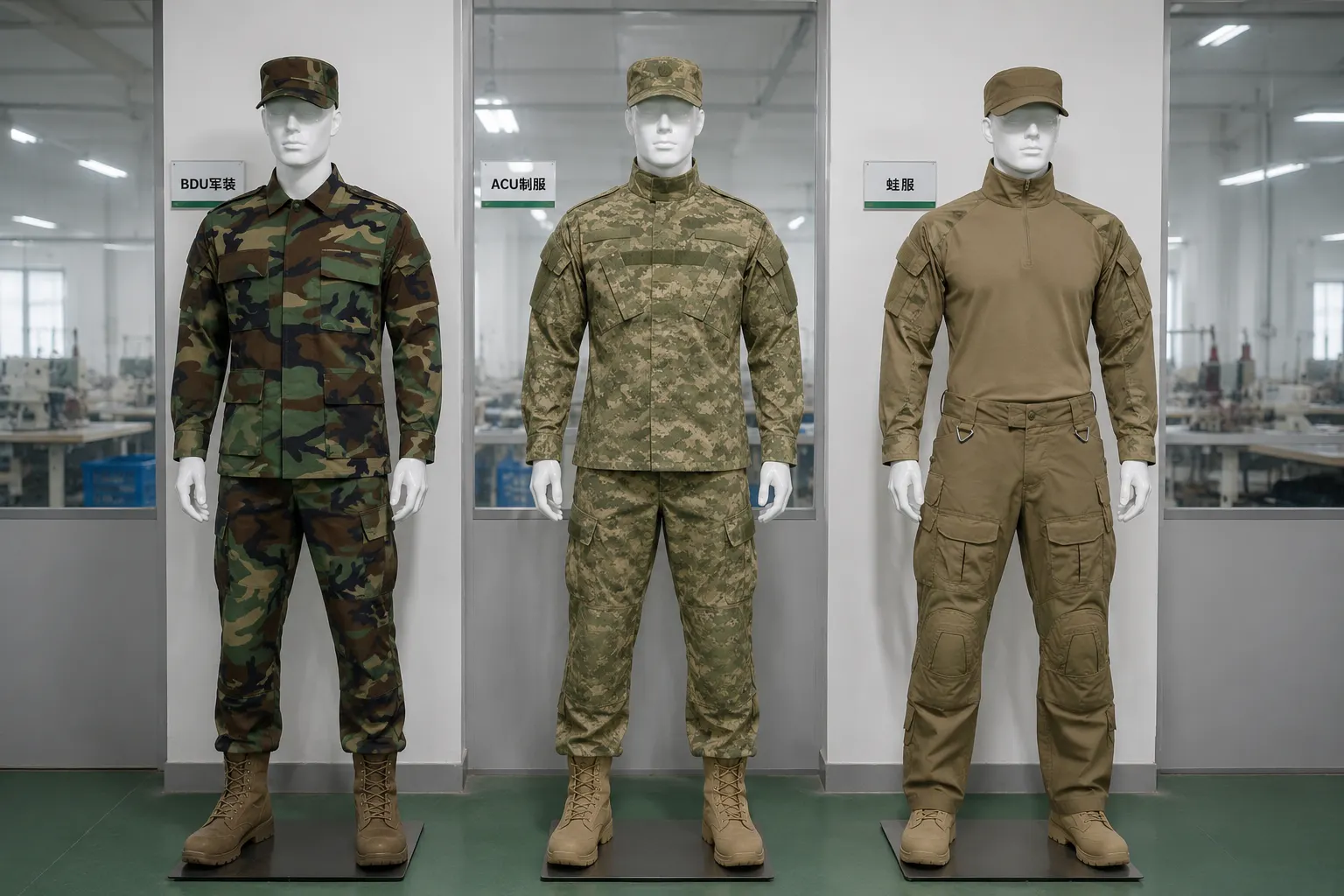
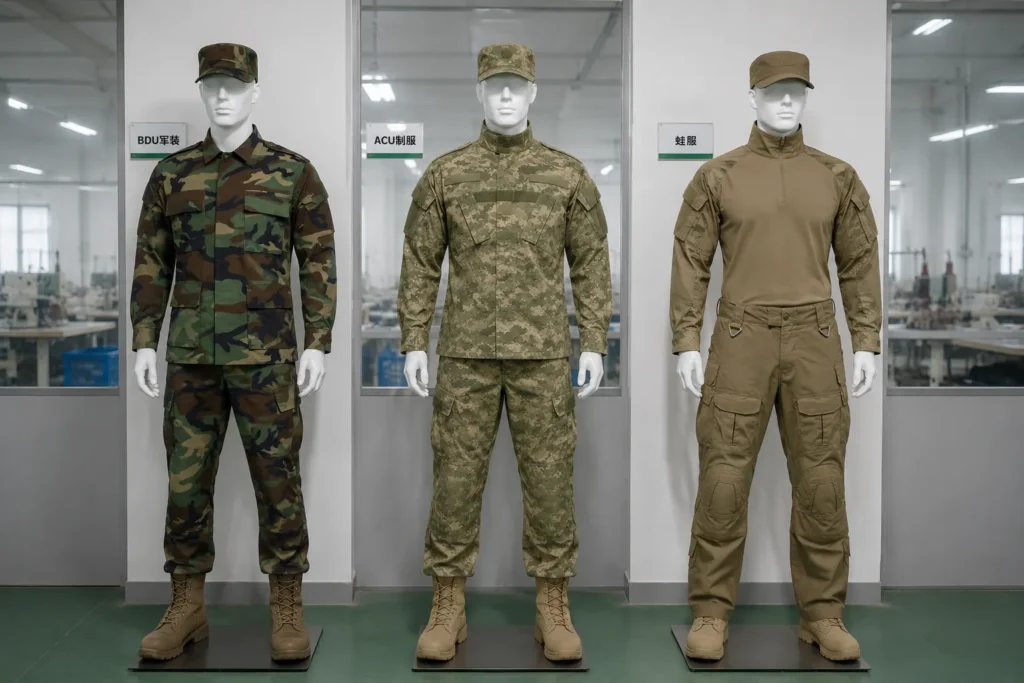
The right tactical uniform depends on the end-use scenario. A classic BDU, a modern ACU, a plate-carrier-friendly combat shirt and a matching tactical hat solve different procurement problems.
| Uniform type | Common features | Best use case | Buyer notes |
|---|---|---|---|
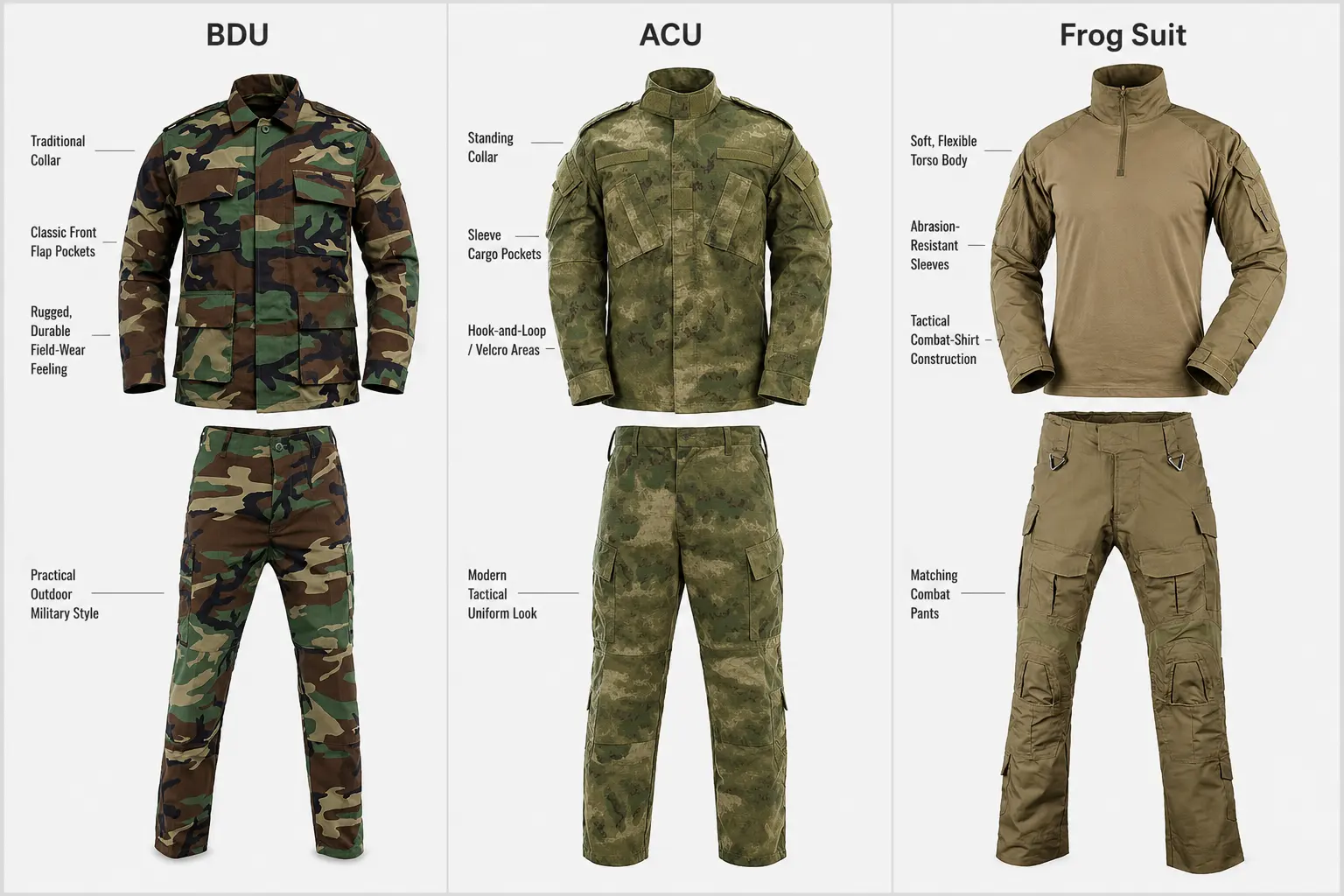
| BDU uniform | Classic collar, button pockets, durable field layout | Military surplus, classic tactical retail, durable field supply | Recognizable traditional style, good for markets that prefer classic military appearance |
| ACU uniform | Stand collar, sleeve pockets, hook-and-loop panels, modern layout | Modern tactical catalogs, police training, patch-based identification | More modular appearance; pocket and patch layout should be confirmed carefully |
| Combat shirt / frog suit | Soft torso, durable sleeves, high mobility, plate-carrier comfort | Hot-weather training, plate carrier users, premium tactical sets | Usually paired with tactical pants; fabric contrast and sleeve durability matter |
| Tactical pants | Cargo pockets, reinforced knees, adjustable waist or cuffs | Uniform sets, outdoor tactical wear, security duty | Fit, pocket angle, knee reinforcement and fabric weight affect user experience |
| Tactical hats | Patrol cap, baseball cap, boonie hat or matching camo headwear | Complete uniform sets, catalog upsell, unit identity | Best sourced with the uniform when color consistency matters |
3. BDU Uniforms: Classic Field Durability
BDU, or Battle Dress Uniform, is a classic field uniform platform. It is often chosen when buyers need a recognizable military-style appearance, durable construction and a familiar pocket layout.
Common BDU design details include:
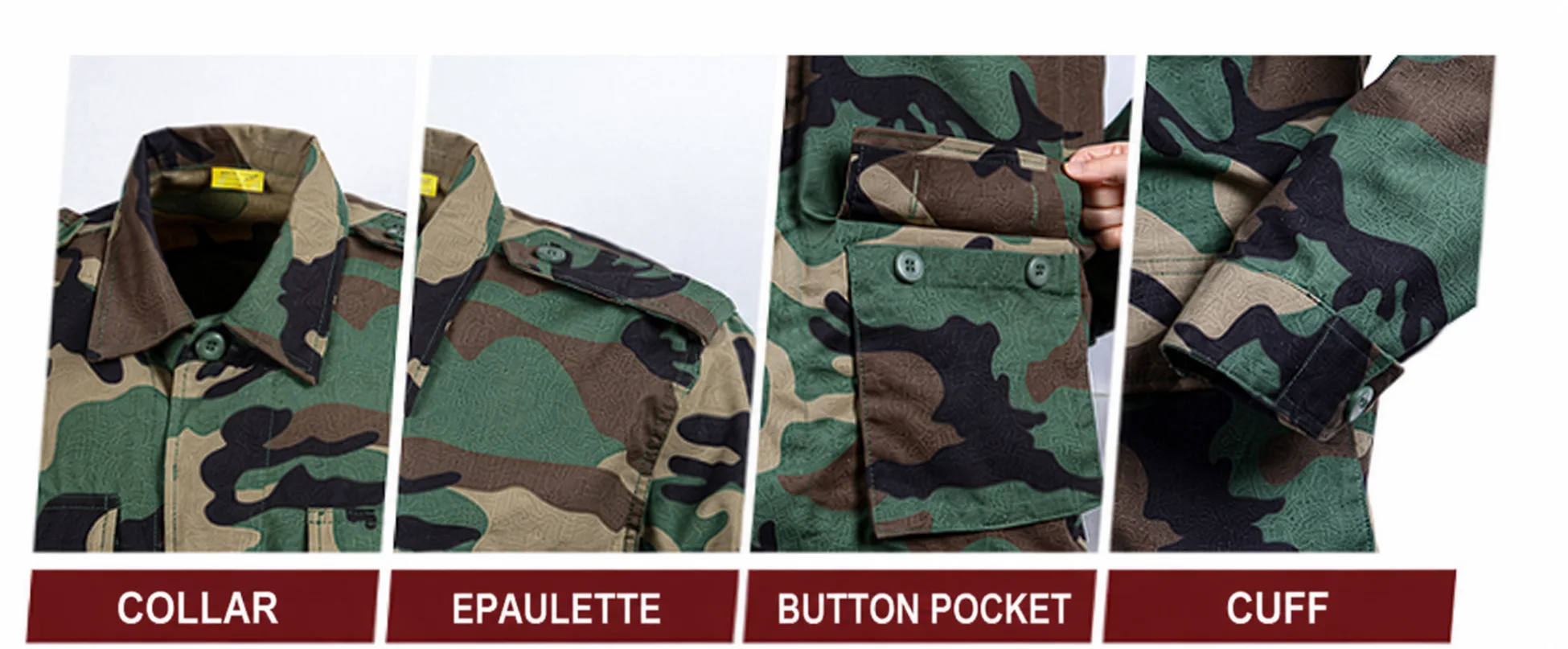
- Classic lay-down collar.
- Chest pockets with button or flap closure.
- Shoulder epaulettes or traditional shoulder styling in some designs.
- Reinforced elbows, knees or seat areas depending on the model.
- Adjustable cuffs or sleeve tabs.
- Woodland camouflage, olive drab, black, khaki or other solid colors.
BDU uniforms work well for military surplus channels, classic tactical gear stores, outdoor fieldwear catalogs and buyers who want a traditional uniform profile. They are also useful in markets where older military uniform styling is still widely recognized.
For quotation, buyers should confirm whether the BDU design uses button closures, hook-and-loop closures, zipper fly, reinforced panels, specific pocket sizes and matched pants. Two products can both be called “BDU uniforms” while having different pocket construction, fabric weight and sewing cost.
4. ACU Uniforms: Modern Tactical Layout
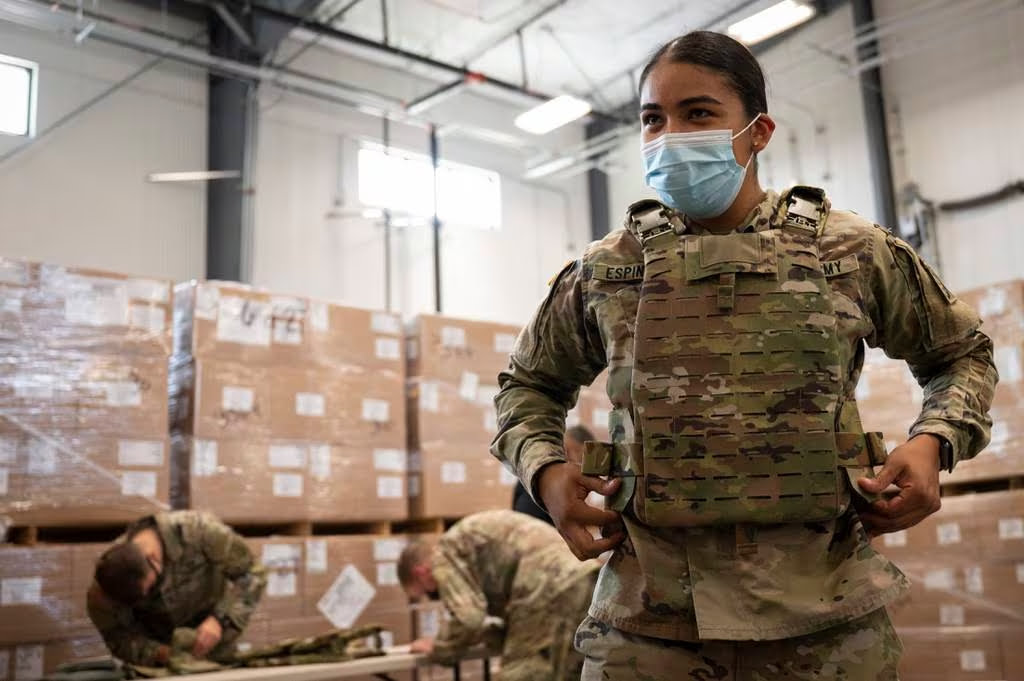
ACU, or Army Combat Uniform, is usually associated with a more modern tactical layout. Compared with classic BDU styling, ACU designs often use a stand collar, sleeve pockets, hook-and-loop patch panels and a more modular appearance.
Common ACU design details include:
- Mandarin or stand collar with hook-and-loop closure.
- Sleeve pockets for patches, ID or small items.
- Hook-and-loop panels on sleeves, chest or name tape areas.
- Adjustable cuffs for fit control.
- Angled utility pockets or tactical pocket layouts.
- Camouflage and solid color options for different markets.
ACU uniforms are suitable for modern tactical catalogs, police or security training programs, NATO-style markets and buyers who need patch-based identification. They are also useful when the buyer wants a product that looks more contemporary than traditional BDU.
Before ordering ACU uniforms in bulk, confirm patch panel size, pocket angle, sleeve pocket closure, collar structure, cuff adjustment and fabric weight. These small details affect both appearance and field usability.
Explore Zennison’s ACU uniforms to compare available styles and customization options.
5. Combat Shirts and Frog Suits: Mobility Under Plate Carriers
Combat shirts and frog suits solve a different problem from standard uniform jackets. They are often designed for users who wear plate carriers, tactical vests or load-bearing equipment for long periods.
A common combat shirt structure uses a softer, more breathable torso panel with stronger sleeves. The torso sits under the vest, while the sleeves provide abrasion resistance, camouflage continuity and pocket or patch functions.
Common buyer considerations include:
- Torso fabric comfort and breathability.
- Sleeve fabric durability and camouflage matching.
- Elbow reinforcement or elbow pad compatibility.
- Collar height and zipper structure.
- Sleeve pocket and patch placement.
- Color matching between combat shirt sleeves and tactical pants.
Combat shirts are especially relevant for premium tactical brands, training kits, hot-weather field use and buyers targeting plate-carrier users. For OEM projects, the buyer should confirm whether the torso fabric, sleeve fabric and pants fabric are intended to match exactly or simply coordinate visually.
6. Fabric, Weight and Ripstop Construction
Fabric selection is one of the most important cost and performance decisions in tactical uniform procurement. A uniform used for hot-weather training should not be built the same way as a cold-weather or heavy-duty field uniform.
Common fabric directions include:
- TC poly-cotton fabric: a common practical choice for durability, cost control and everyday tactical use.
- Ripstop fabric: uses a visible grid structure to help improve tear resistance and field durability.
- Nylon blend fabric: can support lighter or more technical product positioning depending on the specification.
- Camouflage printed fabric: useful for tactical, hunting, surplus and regional uniform programs.
- Solid tactical colors: olive drab, coyote, khaki, black and navy are common for security and outdoor markets.
Many tactical uniform projects use mid-weight fabrics because buyers need a balance between durability, breathability and cost. If your market expects a rugged field feel, ask about fabric weight, yarn composition, ripstop structure and shrinkage control. If your market is price sensitive, confirm whether a lighter fabric still meets the user’s expectations.
For bulk orders, do not compare quotations by fabric name alone. A “ripstop uniform” can vary greatly depending on fabric weight, composition, finishing, color fastness, sewing quality and reinforcement details.
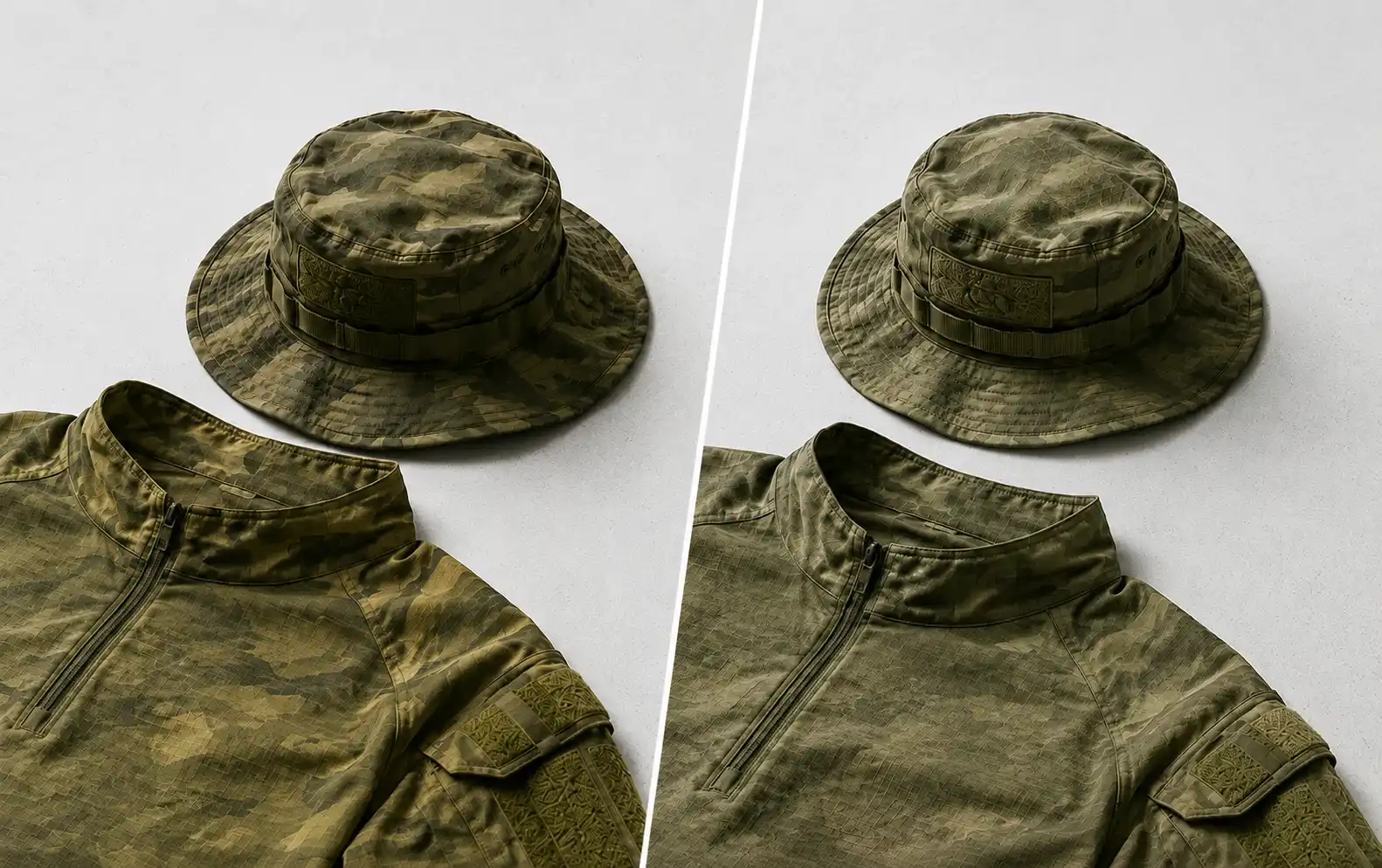
7. Camo and Color Matching: The Hidden Risk in Uniform Orders
Camouflage and color matching are often underestimated. A buyer may spend time choosing a camouflage pattern but forget that the same pattern can look different across shirt fabric, pants fabric, cap fabric and different production batches.
Color mismatch can happen because of:
- Different base fabrics used for shirts, pants and hats.
- Different printing or dyeing processes.
- Different suppliers producing matching items separately.
- Different fabric lots used during repeat orders.
- Different lighting conditions during sample approval.
This is especially important for buyers building a complete tactical line. A uniform set may include a BDU or ACU top, pants, patrol cap, baseball cap or boonie hat. If those items do not visually match, the whole set may feel inconsistent even when each item is technically acceptable.
To reduce risk, confirm the camouflage artwork, fabric base, approved color standard, sample under daylight, pre-production sample and production batch approval. If tactical hats are part of the program, source them together with the uniform whenever possible.
8. OEM Tactical Uniform Customization Checklist
Before requesting a quotation, prepare a clear OEM specification sheet. This helps the manufacturer quote accurately and reduces misunderstanding during sampling.
OEM Tactical Uniform Specification Checklist
Use this checklist before asking for a tactical uniform quotation:
- Uniform type: BDU, ACU, combat shirt, frog suit, pants, hat or full set.
- Fabric composition: TC poly-cotton, polyester-cotton, nylon blend, ripstop or custom.
- Fabric weight: target GSM or reference sample.
- Camouflage or color: woodland, desert, multicam-style, olive drab, coyote, black, khaki or Pantone color.
- Size range: regional sizing, measurement chart and tolerance.
- Top structure: collar, chest pockets, sleeve pockets, patch panels and closure method.
- Pants structure: cargo pockets, knee reinforcement, waistband, ankle cuffs and fly closure.
- Reinforcement: elbows, knees, seat, cuffs, stress points or double-layer fabric zones.
- Hook-and-loop: sleeve patch area, name tape area, pocket closure or adjustable cuffs.
- Accessories: patrol cap, boonie hat, baseball cap, belt or other matching items.
- Branding: woven label, printed logo, embroidery, hangtag, patch or packing card.
- Packing: individual polybag, size label, carton quantity, carton marks and export packing.
- QC requirements: size measurement, color check, fabric inspection, stitching check and final packing inspection.
The more specific this list is, the easier it is to compare suppliers. Without these details, a low quotation may simply mean lighter fabric, fewer reinforcements, simpler pocket construction, weaker trims or no color-matching control.
9. Quality Control Points for Bulk Tactical Uniforms
For tactical uniform bulk orders, QC should focus on consistency, fit and field-use details. A uniform can look acceptable from a distance but still fail buyer expectations if the measurements, pocket placement, stitching or color matching are inconsistent.
Recommended QC checks include:
- Fabric color and camouflage pattern comparison against approved sample.
- Finished size measurement by size and style.
- Chest, shoulder, sleeve, waist, inseam and hip measurement checks.
- Pocket placement, pocket size and closure alignment.
- Button, zipper, hook-and-loop and drawcord function tests.
- Reinforced elbow, knee, seat and cuff construction checks.
- Stitching strength at stress points.
- Label, patch, logo and hangtag accuracy.
- Matching check between top, pants and tactical hats.
- Polybag, size sticker, carton quantity and shipping mark confirmation.
For private-label or government-style projects, also confirm whether your market needs fabric test reports, care labels, color fastness documentation, packaging labeling or specific tender documentation.
10. Common Buying Mistakes
The most common mistake is treating all tactical uniforms as interchangeable. A BDU, ACU and combat shirt may all be used in tactical markets, but they are not the same product and should not be quoted as if they were.
Other common mistakes include:
- Choosing camouflage only from a screen image without approving fabric samples.
- Sourcing tactical hats separately and discovering color mismatch later.
- Ignoring fabric weight when comparing prices.
- Forgetting to confirm patch panel size and placement.
- Using a generic size chart for a region that needs different fit standards.
- Approving one sample but changing logo, label or packing after price confirmation.
- Comparing BDU and ACU quotations without checking pocket layout and reinforcement details.
- Not checking carton quantity and packing method before calculating landed cost.
For B2B buyers, the goal is not simply to buy the cheapest tactical uniform. The goal is to choose the right uniform platform and production specification for the target climate, user group, sales channel and repeat-order plan.
11. Which Tactical Uniform Should You Choose?
If you need a classic field uniform with broad military recognition, start with a BDU-style uniform. It is suitable for traditional tactical retail, surplus-style product lines and durable fieldwear programs.
If you need a more modern tactical layout with patch compatibility and sleeve pockets, choose an ACU-style uniform. This is useful for police training, security programs and tactical catalogs that need a contemporary look.
If your target users wear plate carriers or need better movement in hot conditions, consider combat shirts or frog suits with tactical pants. This gives stronger mobility and comfort while keeping the sleeves and pants aligned with tactical field requirements.
If you are building a complete private-label tactical line, plan the uniform, pants and hats together. This gives better control over fabric, color matching, logo placement and retail presentation.
Conclusion
Tactical uniforms are not only about camouflage appearance. For bulk procurement, the best choice depends on the full system: uniform platform, fabric, pattern, color matching, pocket layout, reinforcement, size grading, hats, branding, packing and quality control.
A good supplier should help buyers compare these details clearly before sampling. If you are preparing a wholesale or OEM project, define the target user, climate, uniform type, fabric, color standard, matching accessories and packing method before requesting a quote.
Zennison supplies BDU uniforms, ACU uniforms, combat uniforms, tactical pants, matching tactical hats and OEM private-label options for bulk buyers. Visit our tactical uniform manufacturer page to explore available options or request a customized quotation.
FAQ
What is the difference between BDU and ACU uniforms?
BDU uniforms usually have a more classic field uniform layout, often with traditional collar and button-style pockets. ACU uniforms usually have a more modern tactical layout, such as stand collar, sleeve pockets and hook-and-loop patch panels. The best choice depends on the target market, use case and buyer expectations.
Which fabric is best for tactical uniforms?
There is no single best fabric for every tactical uniform. TC poly-cotton and ripstop fabrics are common because they balance durability, comfort and cost. Buyers should choose fabric based on climate, target price, durability needs, color requirements and whether the uniform is for retail, training or institutional supply.
Can tactical uniforms be customized with logos and patches?
Yes. Common customization options include woven labels, printed logos, embroidery, hook-and-loop patch panels, name tape areas, custom hangtags, private-label packing and carton marking. The exact method depends on fabric, order quantity and brand positioning.
Why is camo color matching important for bulk uniform orders?
Color matching is important because uniforms, pants and hats may use different fabrics or production batches. If they are sourced separately, the camouflage or solid color may not match. This can affect the perceived quality of the whole set, especially for private-label tactical brands and uniform programs.
Should buyers source tactical hats together with uniforms?
If the project requires a matched set, sourcing tactical hats together with uniforms is usually safer. It helps control camouflage pattern, color tone, fabric compatibility and overall presentation. This is especially important for patrol caps, baseball caps and boonie hats sold as part of a complete tactical line.
What should buyers confirm before mass production?
Buyers should confirm the uniform type, fabric composition, fabric weight, color or camouflage pattern, size chart, pocket layout, reinforcement zones, patch panels, logo method, matching accessories, packing method and QC requirements. A pre-production sample should be approved before mass production begins.