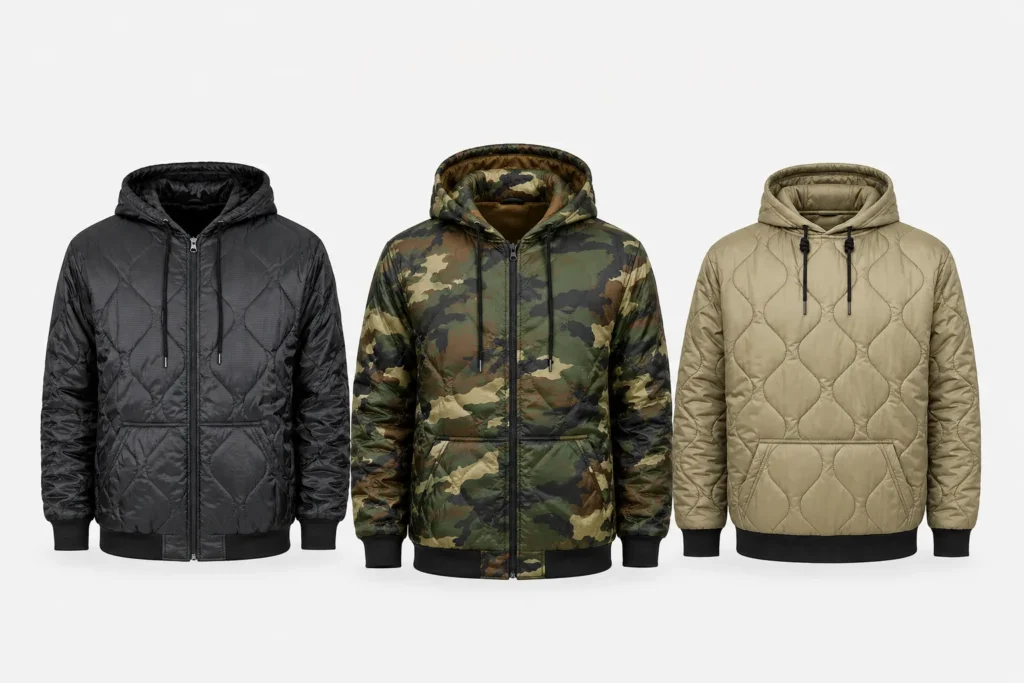
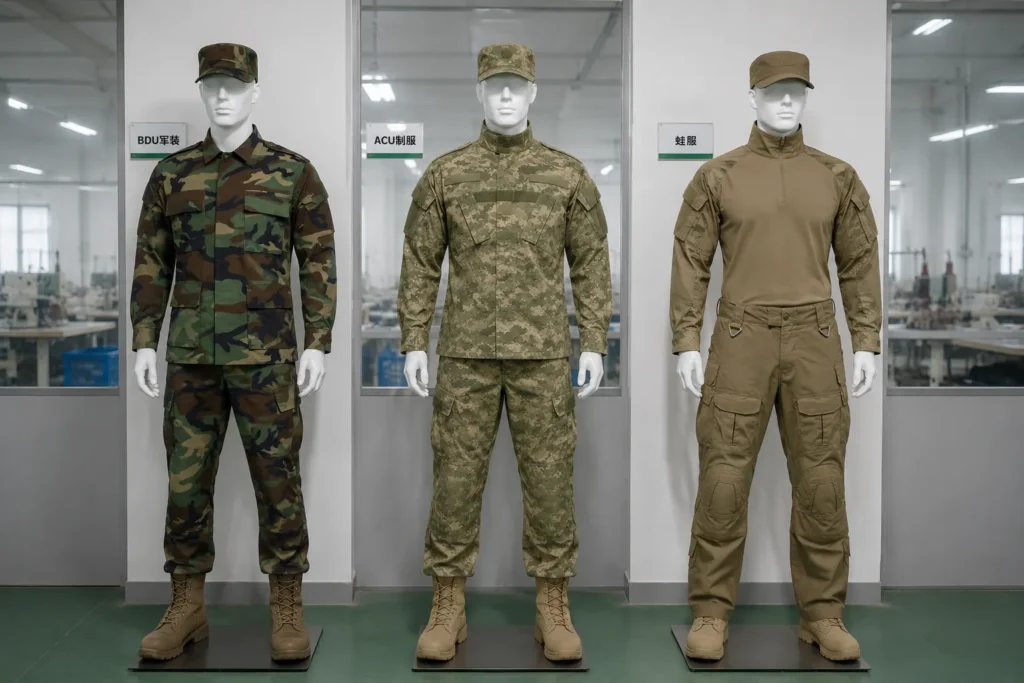
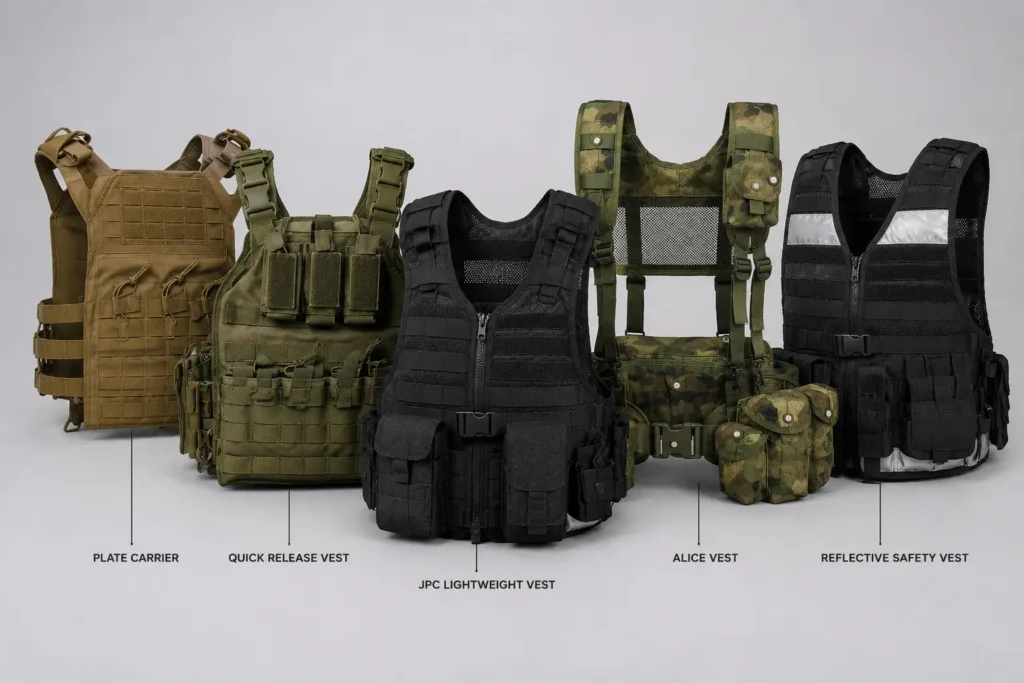
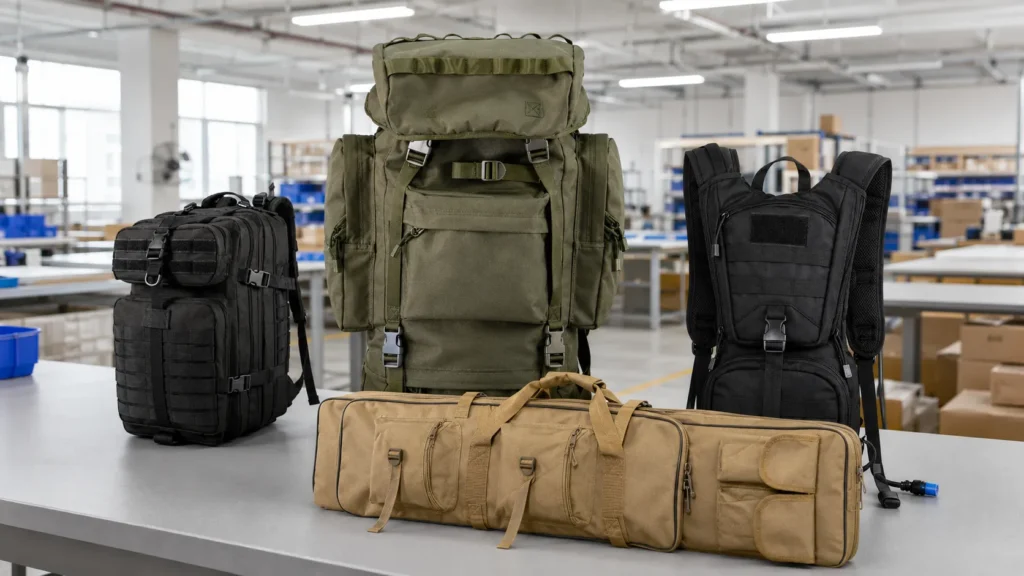
The word “woobie” comes from the military poncho liner culture, but a woobie hoodie is not simply a blanket with sleeves. For bulk buyers, it sits between tactical apparel, quilted insulated outerwear, hunting camouflage clothing and casual military-style hoodies.
That hybrid identity is exactly why specifications matter. If the shell fabric feels too thin, the batting is uneven, the quilting is weak, or the packing method is not planned correctly, the product may look good in photos but fail in repeat orders.
This guide explains how to compare woobie hoodies before placing a wholesale or OEM order. If you are already preparing a sourcing project, Zennison’s woobie hoodie manufacturer page gives a direct overview of available tactical woobie hoodie, camo hoodie and OEM bulk options.
Quick Answer: What Should Bulk Buyers Check First?
Before requesting a woobie hoodie quotation, buyers should confirm the shell fabric, batting, quilt pattern, hoodie structure, pocket style, cuff and hem, camouflage or solid color, size range, branding method and packing plan. These details decide whether the product is suitable for tactical retail, hunting apparel, outdoor lifestyle, military surplus, team supply or private-label e-commerce.
A practical baseline checklist is:
- Shell fabric: camo printed fabric, solid color fabric, nylon, polyester or custom material.
- Insulation: batting type, batting weight, loft and warmth target.
- Quilting: stitch pattern, stitch density and insulation stability.
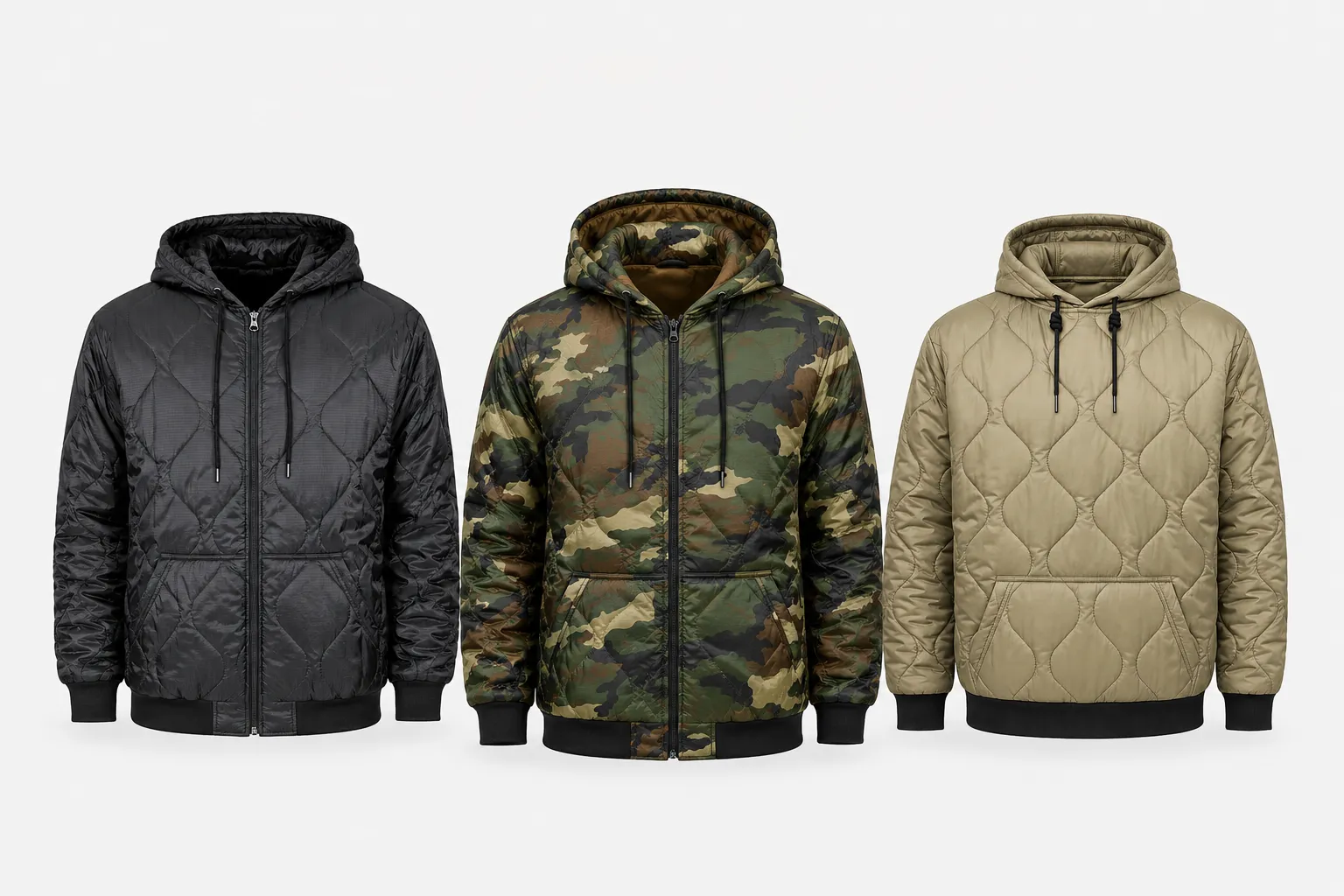
- Style: pullover hoodie, full-zip hoodie, jacket liner style or custom design.
- Details: hood, drawstring, zipper, kangaroo pocket, hand warmer pocket, cuffs and rib hem.
- Color: MultiCam-style, woodland, black, coyote tan, army green, olive green, grey or custom color.
- Branding: woven label, patch, printed logo, hangtag, polybag or private-label carton marking.
- Packing: folded size, carton quantity, gross weight and shipping method.
1. What Is a Woobie Hoodie?
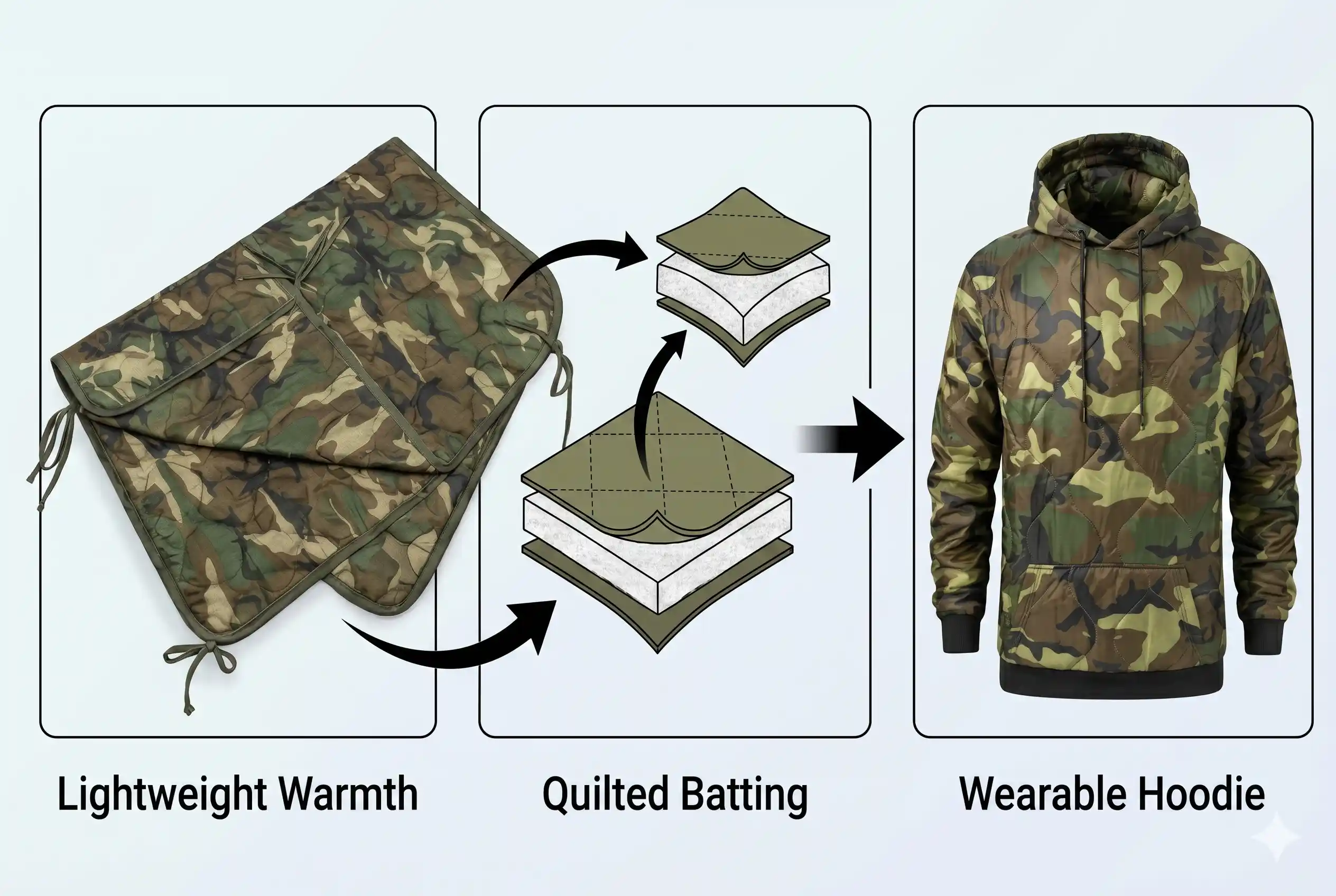
A woobie hoodie is a wearable version of the lightweight quilted warmth associated with military poncho liners. The original woobie idea is valued because it is light, warm, soft and easy to carry. A woobie hoodie turns that comfort concept into a hooded garment that can be worn as tactical casual wear, hunting outerwear, camp clothing or military-style lifestyle apparel.
Unlike a regular fleece hoodie, a woobie hoodie usually uses a quilted shell and batting structure. This gives it a different handfeel, different warmth profile and a more distinctive tactical look.
Common market positions include:
- Tactical and military-style apparel.
- Hunting and camouflage clothing.
- Outdoor camping and survival lifestyle wear.
- Military surplus-inspired retail collections.
- Private-label insulated hoodie programs.
For buyers, the key is not simply whether the hoodie has a camo print. The important question is whether the insulation, quilting, construction, sizing and packing match the target market.
2. Woobie Hoodie vs Regular Hoodie vs Jacket Liner
A woobie hoodie often gets compared with regular hoodies and jacket liners, but the products solve different problems. This difference matters when buyers compare costs and samples.
| Product type | Core structure | Best use case | Buyer notes |
|---|---|---|---|
| Regular fleece hoodie | Knit fleece or sweatshirt fabric, usually not quilted | Casual retail, sportswear, basic apparel | Soft and familiar, but lacks the poncho liner / quilted tactical identity |
| Woobie hoodie | Quilted shell with batting insulation and hoodie construction | Tactical apparel, hunting, outdoor lifestyle, camo retail | Distinctive look and warmth; specification depends heavily on quilting and filling |
| Jacket liner / M65 liner style | Quilted liner structure, often without full hoodie styling | Military surplus, layering, vintage-inspired products | Good reference for quilted warmth, but not always retail-ready as a hoodie |
| Lightweight insulated jacket | Outerwear shell, insulation and jacket construction | Outdoor apparel and cold-weather retail | More jacket-like; may cost more and lose the woobie identity |
3. Quilting and Batting: The Core of a Woobie Hoodie
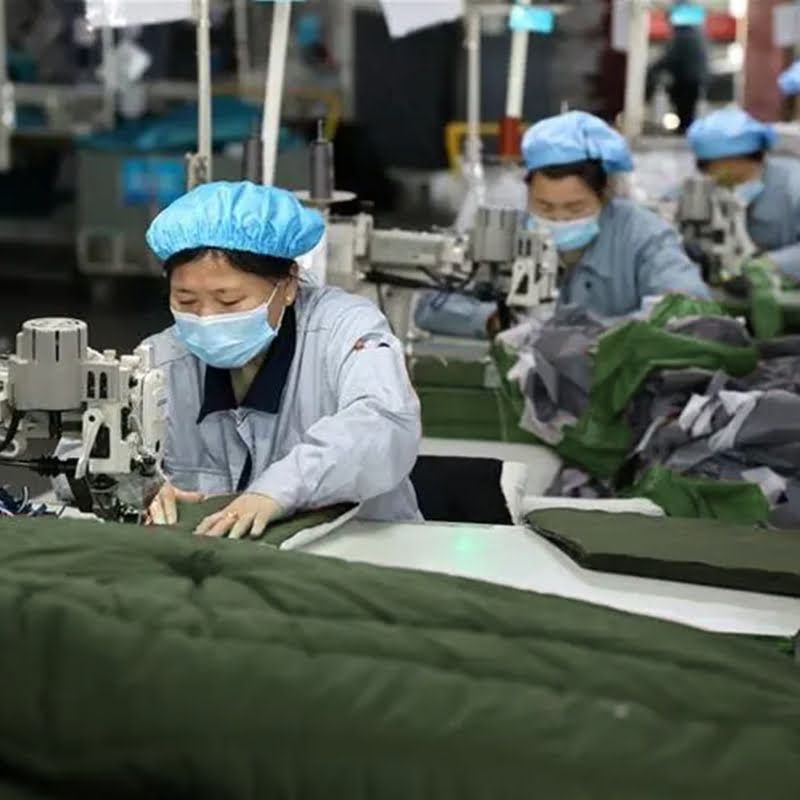
The heart of a woobie hoodie is the quilted insulation structure. The shell fabric creates the outer appearance, but the batting and quilt stitching decide the warmth, loft, handfeel and long-term stability.
Key terms buyers should understand include:
- Quilt: the stitched pattern that holds the insulation in place.
- Batting: the insulation layer inside the hoodie.
- Loft: the thickness and recovery of the insulation.
- Stitch density: how close the quilting lines are and how stable the filling remains.
- Shell fabric: the outer fabric that carries the camo or solid color.
For bulk orders, buyers should not approve a woobie hoodie only by appearance. A sample should be checked by touch, weight, warmth expectation, quilting consistency and recovery after folding or compression.
If the batting is too thin, the hoodie may feel cheap. If the batting is too heavy, the product may become bulky, more expensive and harder to pack efficiently. If the quilting is weak, the insulation may shift after use or washing, creating uneven warmth and visual defects.
4. Key Construction Details Buyers Should Confirm
Woobie hoodies are apparel products, so small construction details can strongly affect user satisfaction. These details also affect unit cost and quotation accuracy.
Important construction points include:
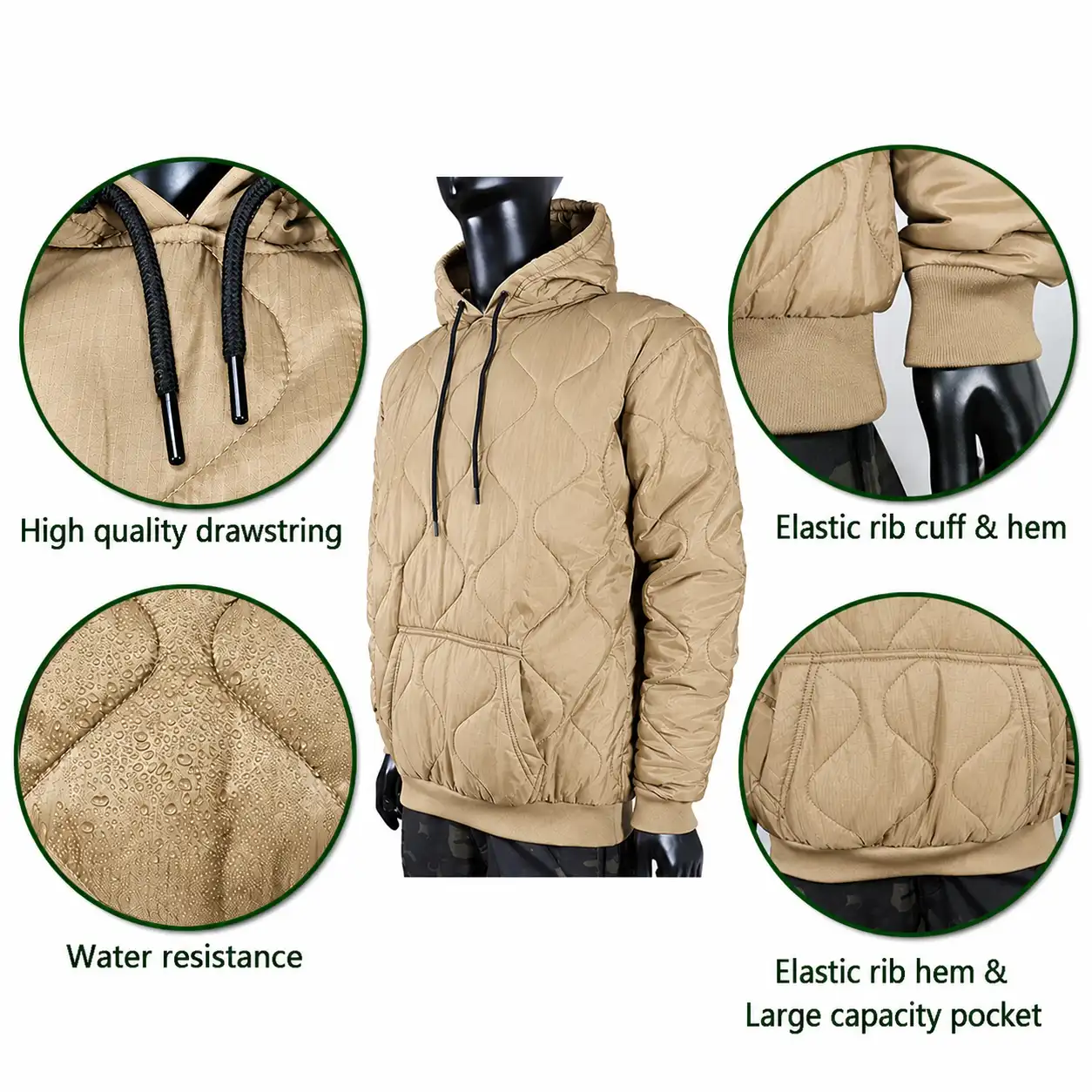
- Hood: confirm hood shape, depth, lining and whether the hood uses the same quilted fabric.
- Drawstring: confirm cord type, eyelet, stopper and color.
- Zipper: full-zip designs need smooth zipper quality, puller style and zipper tape color.
- Kangaroo pocket: common for pullover styles and useful for casual retail appeal.
- Hand warmer pocket: can improve outdoor comfort and product value.
- Cuff / sleeve opening: confirm elastic rib, binding or adjustable finish.
- Rib hem: affects fit, warmth retention and overall hoodie appearance.
- Inside finishing: seams, lining and batting exposure should be checked before approval.
For OEM programs, buyers should send a target sample or technical reference if they already have a preferred fit. A loose outdoor hoodie, a tactical pullover and a fashion retail hoodie may all require different body length, chest width, sleeve length and hood shape.
5. Camo Patterns and Solid Colors
Woobie hoodies are often purchased because of their camouflage and tactical look. However, camo and color choice should follow the target market, not only the buyer’s personal preference.
Common color and pattern directions include:
- MultiCam-style or CP-style camouflage for modern tactical markets.
- Woodland camouflage for classic military and hunting appeal.
- Black for urban tactical, security and casual wear.
- Coyote tan for desert, outdoor and military-style apparel.
- Army green or olive green for fieldwear and surplus-inspired collections.
- Grey for softer lifestyle positioning.
For private-label orders, buyers should approve physical color samples before production. Screen images can be misleading, especially for camo patterns and green or coyote shades. If repeat orders are expected, the buyer should also ask how color consistency will be managed across future batches.
6. Pullover vs Full-Zip Woobie Hoodies
One of the first design decisions is whether to make the woobie hoodie as a pullover or a full-zip style. Both can work, but they have different market positioning and cost implications.
A pullover woobie hoodie usually has a classic hoodie look. It often uses a kangaroo pocket, drawstring hood and rib cuff or hem. This style is easy to understand for retail customers and works well for casual tactical apparel.
A full-zip woobie hoodie is easier to wear as a lightweight jacket or outer layer. It may be more convenient for outdoor users because it can be opened or removed quickly. However, zipper quality becomes more important, and the quotation may change depending on zipper length, zipper grade and finishing method.
For bulk buyers, the decision should be based on the target customer:
- Choose pullover if the market wants a classic hoodie silhouette.
- Choose full-zip if the market wants easier layering and jacket-like use.
- Choose a liner-inspired jacket style if the product line targets military surplus or vintage outdoor customers.
7. OEM Woobie Hoodie Customization Checklist
Before asking for a quotation, prepare a clear specification sheet. This helps the supplier quote accurately and prevents sample revisions caused by missing details.
OEM Woobie Hoodie Specification Checklist
Use this checklist before requesting a woobie hoodie quotation:
- Style: pullover hoodie, full-zip hoodie, jacket liner style or custom design.
- Shell fabric: polyester, nylon, camo printed fabric, solid color fabric or custom fabric.
- Batting: material, weight, loft and warmth target.
- Quilt pattern: diamond, wave, square or custom quilting.
- Color or camo: MultiCam-style, woodland, black, coyote tan, army green, olive green, grey or custom.
- Hood: shape, size, lining and drawstring.
- Closure: pullover, half zip, full zip or snap closure.
- Pockets: kangaroo pocket, hand warmer pocket, zipper pocket or custom pocket layout.
- Cuffs and hem: elastic rib, binding, adjustable cuff or custom finish.
- Size chart: regional sizing, fit type and measurement tolerance.
- Branding: woven label, printed logo, patch, embroidery, hangtag or packaging card.
- Packing: polybag, folded size, carton quantity, carton dimensions and shipping marks.
- QC requirements: fabric, batting, quilting, zipper, pocket, measurement and packing checks.
The more complete this list is, the easier it is to compare quotations. Without these details, a lower price may simply mean thinner batting, simpler quilting, cheaper zipper, lighter shell fabric or less controlled packing.
8. Packing, Carton and Shipping Cost
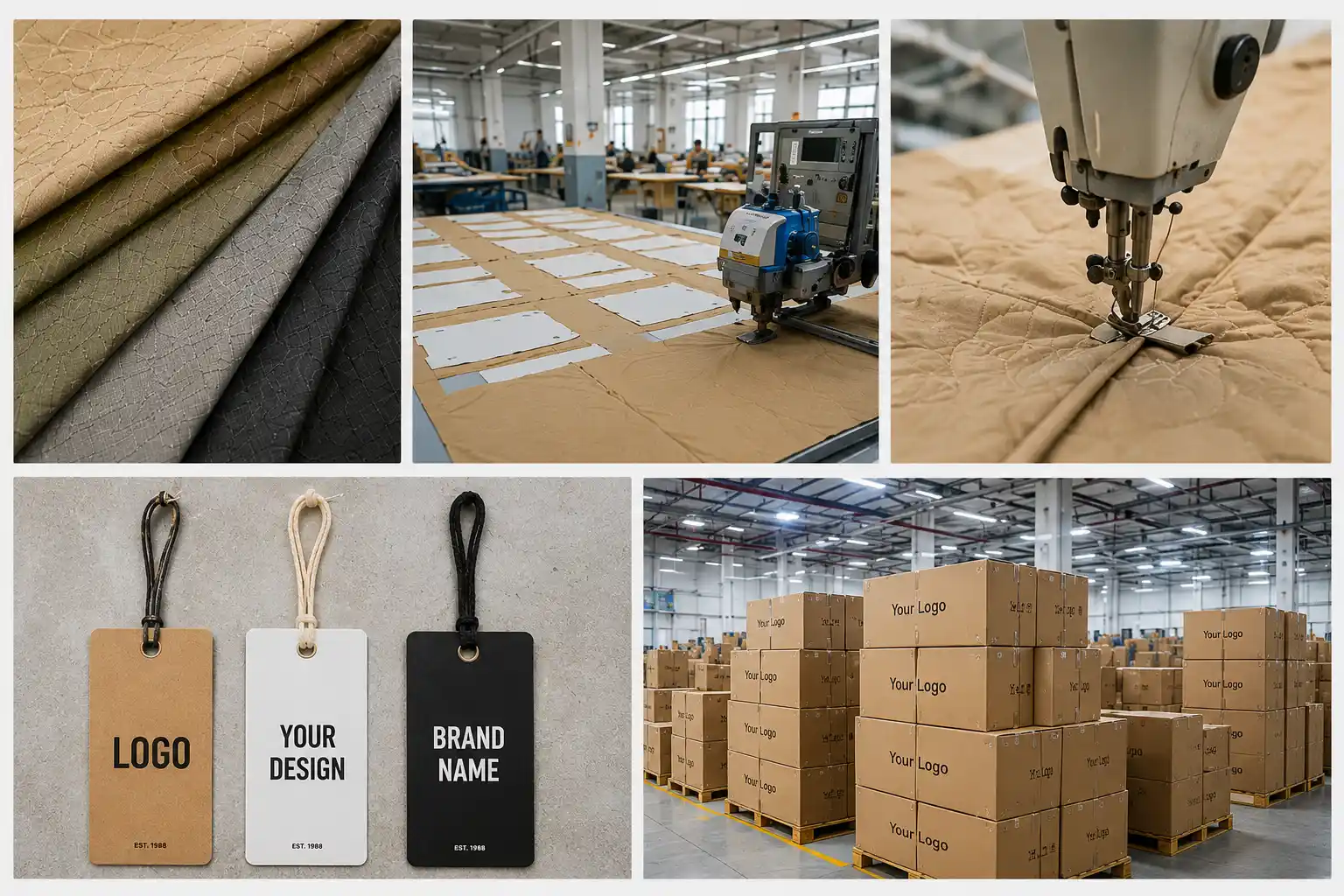
Woobie hoodies are bulkier than regular thin hoodies because of the quilted insulation. This makes packing and shipping more important than many buyers expect.
One reference packing method for woobie hoodies may use a carton around 55 x 55 x 43 cm, with about 25 pieces per carton and a gross weight around 13.5 kg. Actual packing depends on size ratio, fabric thickness, batting weight, folding method and buyer requirements.
For B2B buyers, packing affects:
- Shipping volume and freight cost.
- Carton strength during export handling.
- Product presentation after unpacking.
- Warehouse storage efficiency.
- Whether courier, air freight, LCL or full-container shipping is practical.
Compressed packing may reduce volume, but it can also affect presentation if the product arrives too flattened or wrinkled. For private-label retail, ask for a packing sample or at least clear folded-size and carton-size confirmation before approving bulk production.
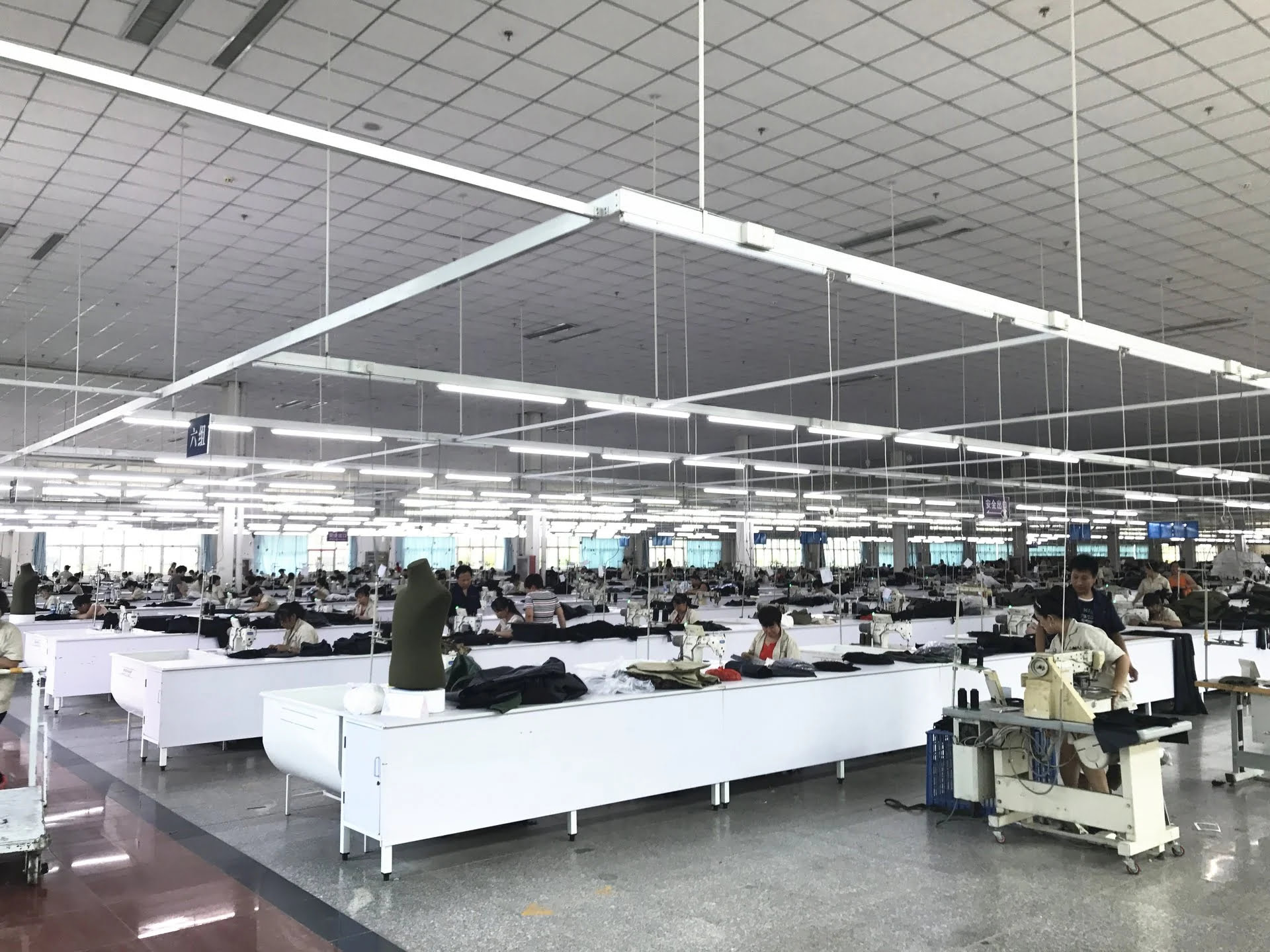
9. Quality Control Points for Bulk Woobie Hoodies
Woobie hoodie QC should focus on both apparel construction and insulation stability. A hoodie can pass a quick visual check but still fail buyer expectations if the quilting, zipper, batting or size measurements are inconsistent.
Recommended QC checks include:
- Shell fabric defects, stains, holes or printing problems.
- Color and camo pattern consistency against approved sample.
- Batting weight, loft and distribution.
- Quilt stitching consistency and skipped stitch inspection.
- Hood shape, drawstring function and eyelet strength.
- Zipper smoothness, zipper alignment and puller strength.
- Kangaroo pocket or hand warmer pocket alignment.
- Cuff and hem elasticity.
- Finished size measurement by size and style.
- Logo, label, hangtag and packing accuracy.
- Carton quantity, carton marks and export packing condition.
For private-label or e-commerce programs, buyers should also check photo consistency, color naming, packaging labels and barcode requirements before shipment.
10. Common Buying Mistakes
The most common mistake is treating a woobie hoodie like a normal sweatshirt. A regular hoodie quotation and a quilted insulated hoodie quotation are not comparable unless the buyer checks fabric, batting, quilting, construction and packing.
Other common mistakes include:
- Choosing camo from photos only without approving a physical sample.
- Ignoring batting weight and only comparing shell fabric.
- Approving a sample without checking quilting stability.
- Underestimating zipper complaints in full-zip styles.
- Forgetting carton volume when calculating landed cost.
- Adding private label, patch or hangtag after the price has already been confirmed.
- Comparing pullover and full-zip designs as if they had the same cost structure.
- Not confirming size chart and fit before mass production.
For B2B buyers, the goal is not simply to find the cheapest woobie hoodie. The goal is to build a specification that matches the target market, retail price, comfort expectation and repeat-order potential.
11. Which Woobie Hoodie Specification Should You Choose?
If you are targeting tactical and hunting buyers, start with a camo quilted hoodie, practical pockets, durable shell fabric and reliable batting. Woodland and MultiCam-style patterns are common directions, but the final pattern should match your market.
If your market is outdoor casual or lifestyle retail, solid colors such as black, coyote tan, army green, olive green or grey may work better. In this case, fit, comfort, branding and packaging may be just as important as tactical appearance.
If you are building a military surplus-inspired line, consider a liner-inspired quilted style or M65 liner reference. This can help connect the product visually to the woobie and poncho liner story.
If you are building a private-label program, define the shell fabric, batting, quilt pattern, color, logo, label, size chart and packing method before sampling. This will make quotation comparison much more reliable.
Conclusion
Woobie hoodies are hybrid products. They are part tactical garment, part quilted insulated hoodie and part poncho liner-inspired comfort wear. For bulk procurement, the best choice depends on shell fabric, batting, quilting, hoodie construction, color, OEM branding, packing and QC.
A good supplier should help buyers compare these details clearly instead of only sending a product photo and unit price. If you are preparing a wholesale or OEM project, define the target market, camo or solid color, insulation level, style, branding and packing requirement before requesting a quote.
Zennison supplies tactical woobie hoodies, camo quilted hoodies, liner-inspired hoodie styles and OEM private-label options for bulk buyers. Visit our woobie hoodie manufacturer page to explore available options or request a customized quotation.
FAQ
What is a woobie hoodie?
A woobie hoodie is a hooded garment inspired by the lightweight quilted warmth of military poncho liners, often called woobies. It usually combines a quilted shell, batting insulation, hood, pocket and tactical or camouflage styling.
Is a woobie hoodie the same as a poncho liner?
No. A poncho liner is a blanket-like liner, while a woobie hoodie is a wearable hoodie or jacket-style garment inspired by that quilted comfort concept. It may use similar warmth and quilting ideas, but it is designed as apparel.
What is the difference between a woobie hoodie and a regular hoodie?
A regular hoodie is usually made from fleece or sweatshirt fabric. A woobie hoodie normally uses quilted fabric and batting insulation, giving it a different warmth profile, handfeel and tactical appearance.
Can woobie hoodies be customized with camo patterns and logos?
Yes. Common customization options include camouflage pattern, solid color, shell fabric, batting weight, quilt pattern, logo, woven label, patch, hangtag, size chart, polybag and carton marking.
What should buyers confirm before bulk production?
Buyers should confirm style, shell fabric, batting, quilt pattern, color or camo, hood, zipper or pullover structure, pocket design, cuff and hem, size chart, branding, packing and QC requirements. A pre-production sample should be approved before mass production.
Why does packing affect woobie hoodie shipping cost?
Woobie hoodies are bulkier than regular thin hoodies because of the quilted insulation. Carton dimensions, pieces per carton, gross weight and compression method can all affect freight cost and product presentation after arrival.