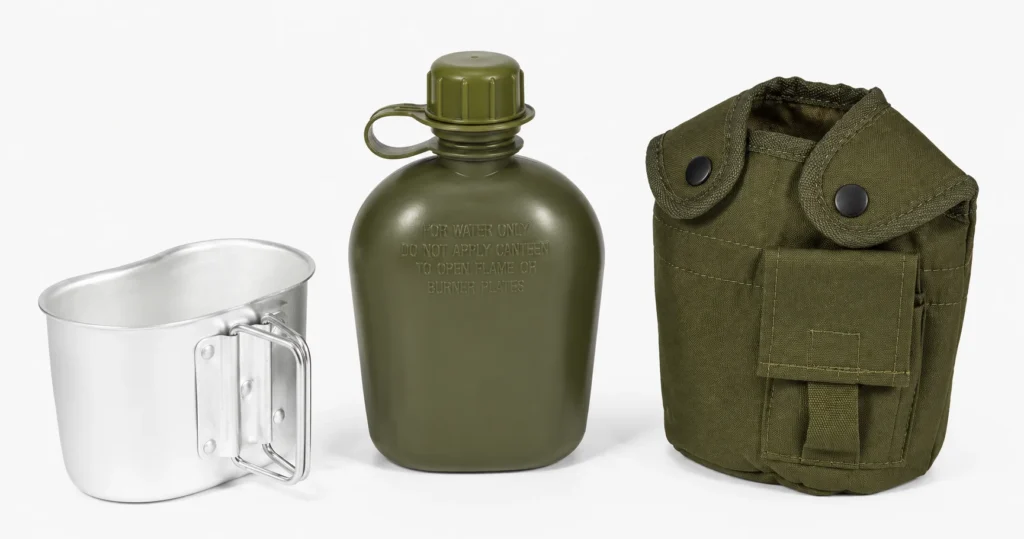
Military canteens and cups look simple from the outside: a water bottle, a cup, and sometimes a fabric cover. In real procurement, however, small specification choices can change the user experience, product durability, packing method, unit cost and complaint rate.
For importers, outdoor brands, government suppliers and tactical gear distributors, the key question is not only which canteen looks military. The more useful question is: which canteen system fits the intended field use, market price point and bulk order requirements?
This guide explains how to compare military canteens, canteen cups and covers before placing an OEM or wholesale order. If you are already preparing an OEM military canteen project, Zennison’s military canteen manufacturer page gives a more direct overview of available bulk and OEM options.
Quick Answer: What Should a Bulk Buyer Check First?
For most military canteen and cup orders, buyers should confirm six specifications first: bottle material, bottle capacity, cup material, cover fabric, insulation layer and packing method. These details decide whether the product is suitable for outdoor retail, tactical training, government supply, camping kits or promotional gear.
A practical baseline specification is:
- Food-grade PE or similar BPA-free plastic for lightweight canteens.
- 800 ml or 1000 ml bottle capacity for U.S. style canteens.
- Aluminum or stainless steel cup depending on weight and durability needs.
- 600D or 900D polyester or nylon cover fabric.
- Optional insulation layer for field comfort and heat protection.
- Custom color, logo, label and carton packing based on the sales channel.
1. Military Canteens Are Usually Sold as a System
A common mistake is to source the bottle only and treat the cup and cover as accessories. In many markets, especially tactical, camping and surplus-style retail, the complete system is what gives the product its value.
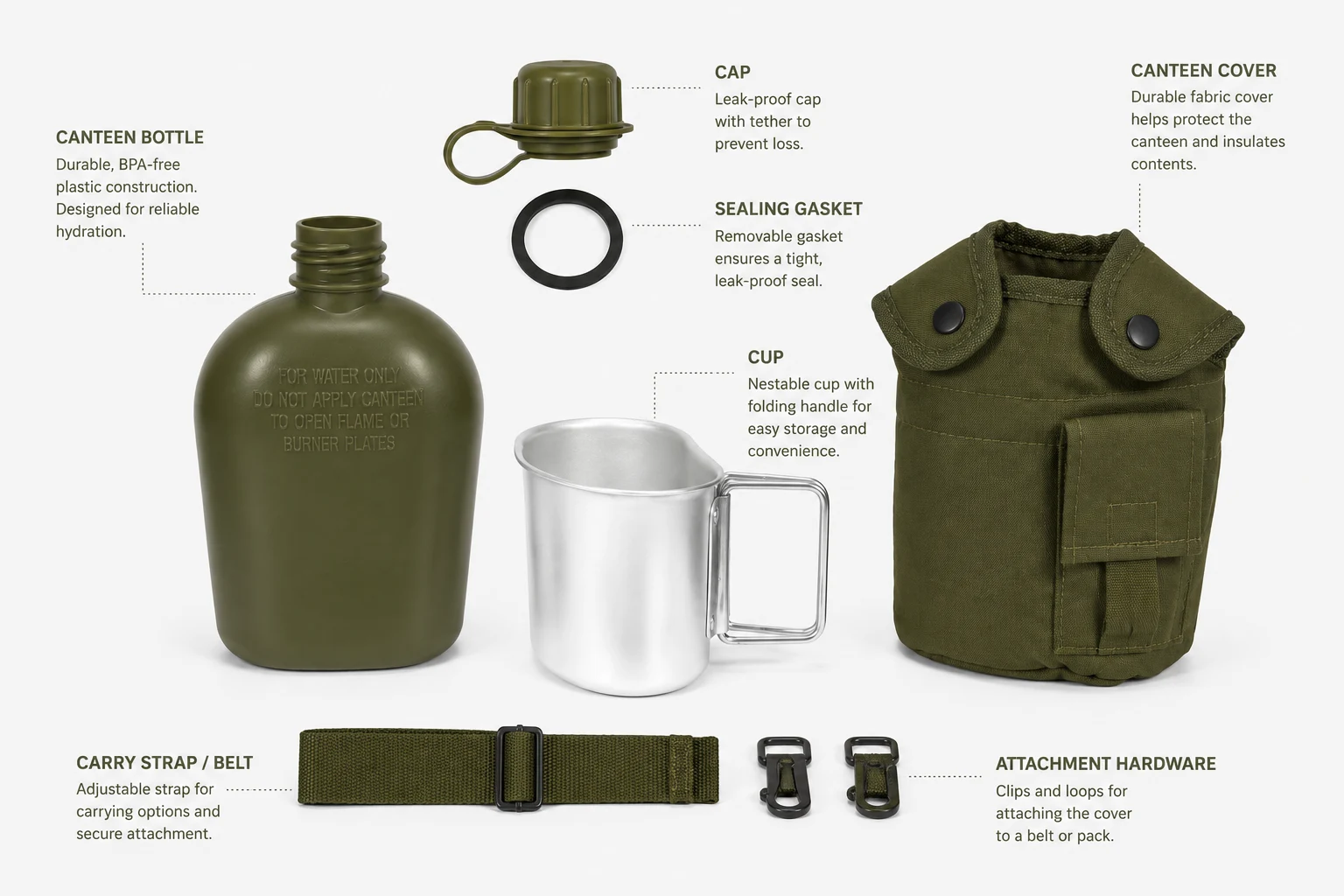
A typical military canteen set may include:
- A plastic or metal water canteen.
- A nesting aluminum or stainless steel cup.
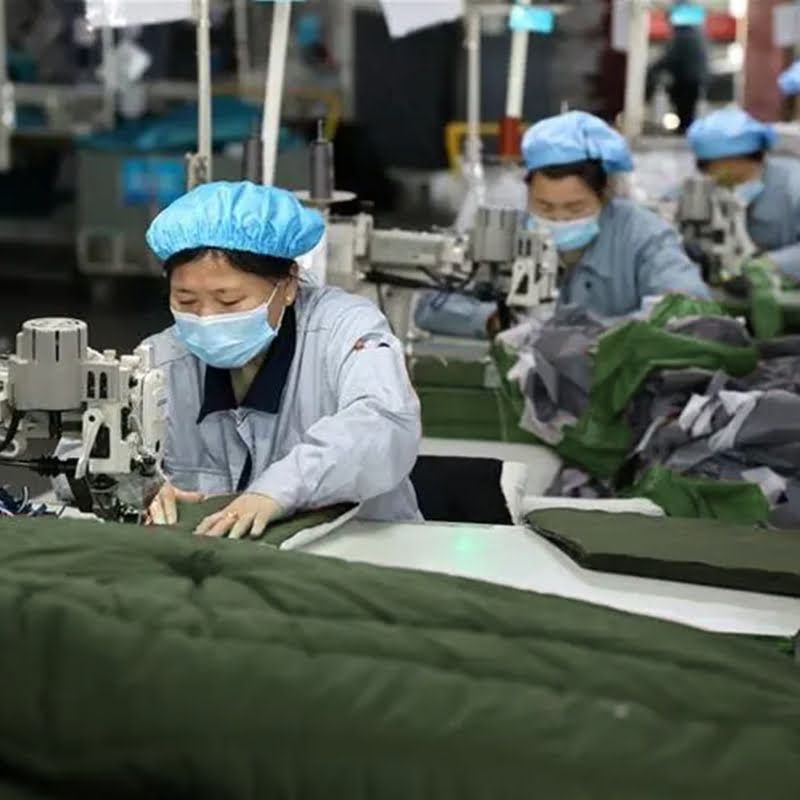
- A fabric canteen cover.
- Optional clips, snap buttons, belt loops or MOLLE-compatible attachment.
- Optional stove stand, cutlery or mess kit add-ons.
This matters because the bottle, cup and cover must fit together. A 1L bottle should nest properly with the cup. The cup handle must not block the cover closure. The cover should not be too tight after the insulation layer is added. These details are easy to miss in a product photo but very obvious when a customer actually uses the kit.
2. Main Types of Military Canteens and Cups
The right product depends on the buyer’s target market. A lightweight outdoor kit, a tactical training kit and a government supply project may require different materials and packaging.
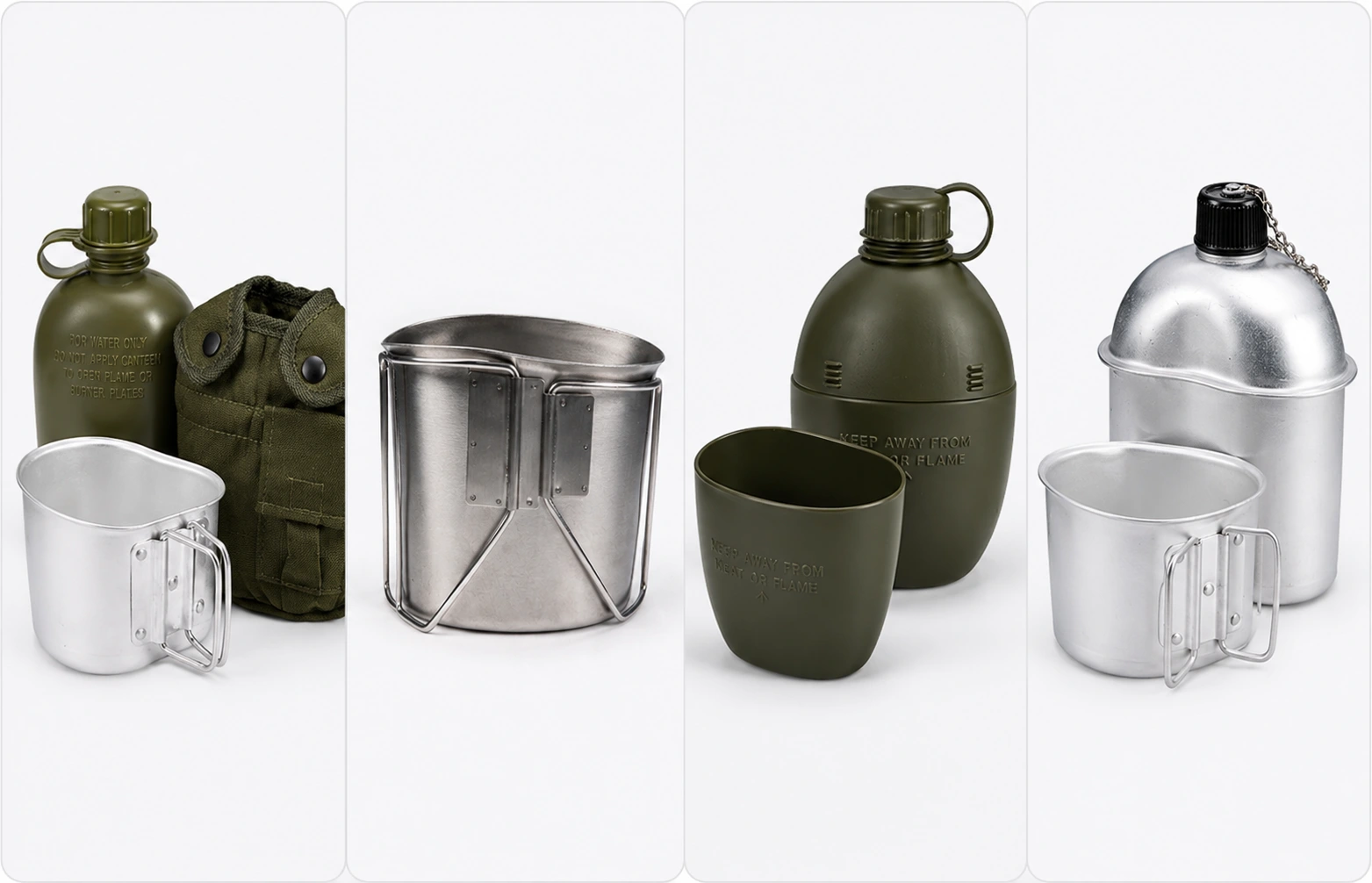
| Product type | Common specification | Best use case | Buyer notes |
|---|---|---|---|
| U.S. style plastic canteen | 800 ml or 1000 ml PE bottle | Tactical retail, camping, training kits | Lightweight, classic military look, easy to pair with cup and cover |
| Aluminum canteen cup | Around 600-700 ml | Lightweight nesting cup sets | Lower weight and cost, but softer than stainless steel |
| Stainless steel canteen cup | Around 700-800 ml | Higher durability kits | Better perceived quality, suitable for premium bundles |
| Canteen cover | 600D or 900D fabric, optional insulation | Field carry and retail presentation | Fabric, insulation and buckle type strongly affect cost |
| British style bottle and mug set | PE bottle with matching mug | Commonwealth-style supply, outdoor kits | Distinctive shape, good for market differentiation |
| Metal canteen and cup set | Aluminum or stainless steel body and cup | Vintage, survival and premium outdoor ranges | Heavier, stronger visual value, more sensitive to finish quality |
3. Plastic Military Canteens: Lightweight and Cost Efficient
Plastic military canteens remain popular because they are lightweight, durable enough for field use and cost efficient for large quantity orders.
For a U.S. style plastic canteen, common buyer requirements include:
- Bottle material: food-grade PE, often requested as BPA-free.
- Cap material: PP.
- Connecting strap: PE or similar flexible plastic.
- Seal ring: silicone.
- Common capacities: 800 ml and 1000 ml.
- Common colors: olive green, black, khaki and custom colors such as navy.
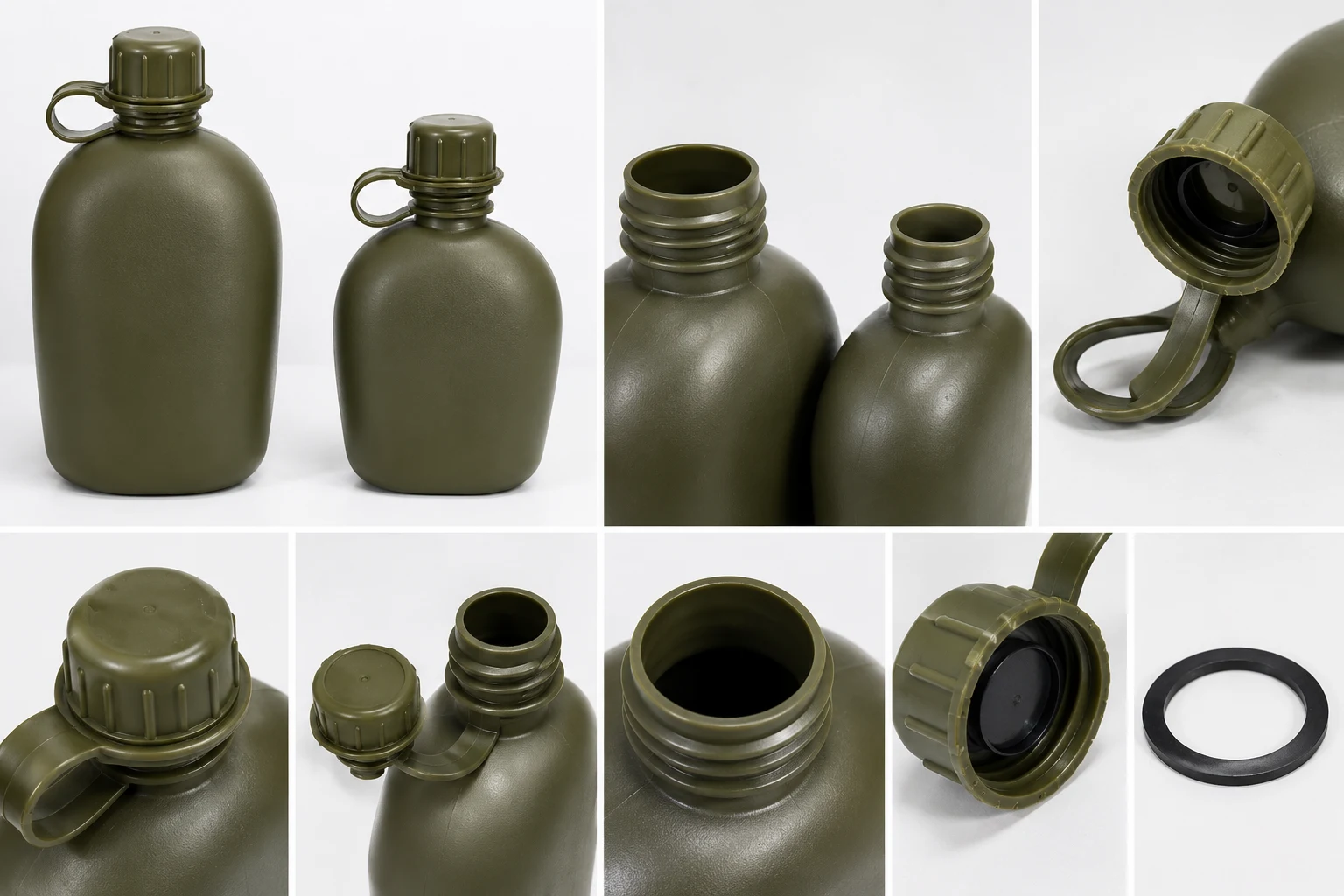
For bulk orders, buyers should not only ask for the bottle capacity. They should also confirm wall thickness, bottle weight and cap sealing performance. A canteen that looks the same in photos may feel very different if the plastic is thinner or the cap thread is poorly finished.
For example, a 1L style plastic canteen may be offered in different weight levels. A slightly heavier bottle usually feels more solid and may perform better in long-term use, while a very light bottle can help reduce cost but may not match a premium tactical brand’s expectations.
4. Aluminum vs Stainless Steel Canteen Cups
The canteen cup is where many buyers make the most important quality decision.
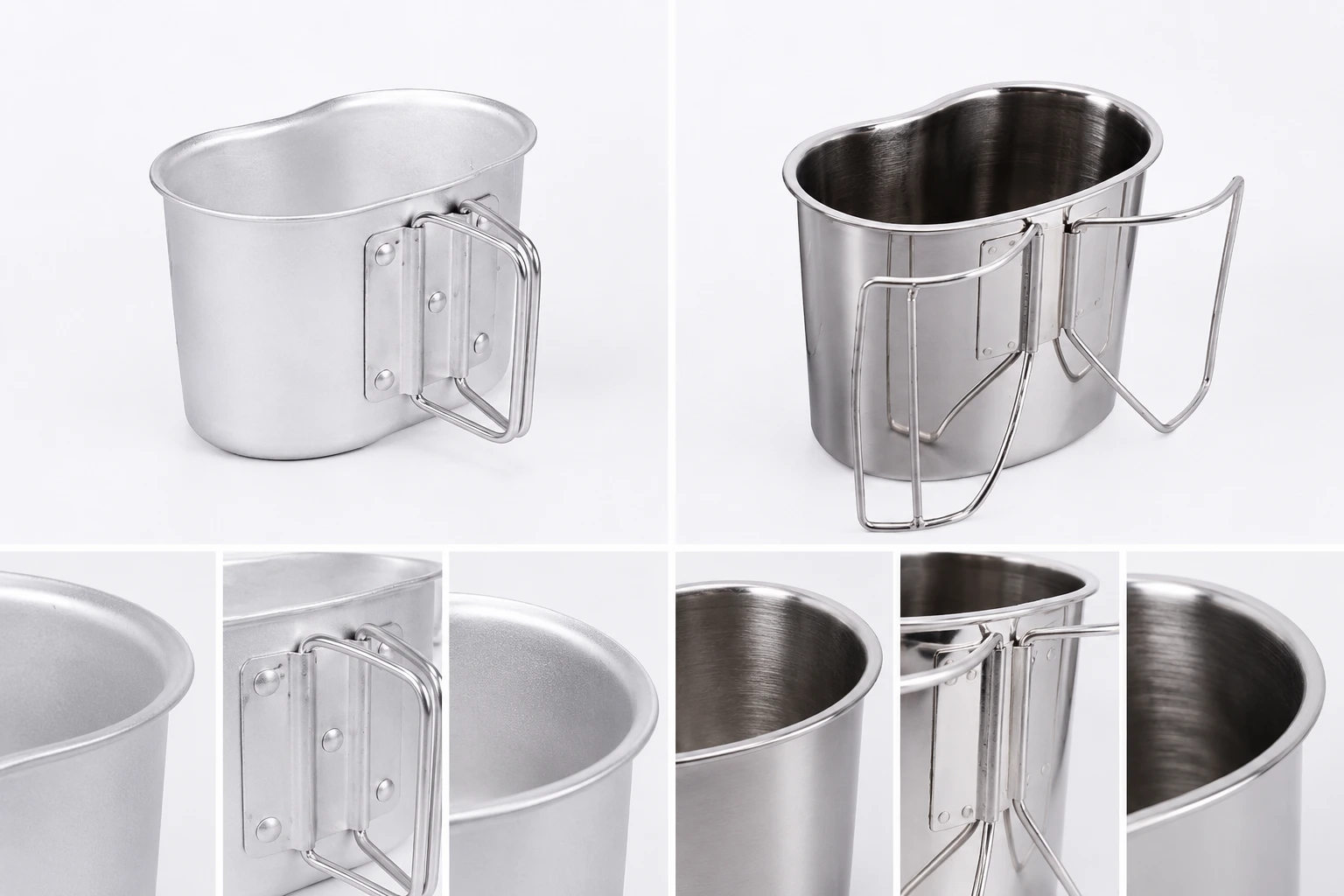
Aluminum cups are usually lighter and cost effective. They are suitable for outdoor bundles, entry-level military-style kits and price-sensitive retail channels. A common aluminum cup may be around 700 ml, with a lightweight body and foldable handle.
Stainless steel cups are heavier but usually feel more durable and premium. They are often preferred for higher-value camping kits, tactical gift sets and buyers who want a stronger product perception. Stainless options may include SS304 or other stainless grades depending on target cost and compliance requirements.
When comparing cup options, confirm:
- Cup material and grade.
- Cup capacity.
- Cup weight tolerance.
- Surface finish.
- Handle style.
- Whether the cup nests smoothly with the canteen.
- Whether the handle interferes with the cover.
Do not decide only by material name. The handle structure, rivet quality, edge finishing and cup fit can affect user satisfaction as much as the metal itself.
5. Canteen Covers: The Part That Often Controls the Final Price
The canteen cover may look like a small fabric pouch, but it can change the final unit price significantly.
Main cost factors include:
- Outer fabric: polyester, nylon, waterproof fabric or camouflage fabric.
- Fabric density: common options include 600D and 900D.
- Insulation layer: standard insulation or fleece-style insulation.
- Closure method: snap button, metal buckle, plastic buckle or hook-and-loop.
- Back attachment: belt loop, clip, webbing or MOLLE-style structure.
- Front pocket: with or without small pocket.
- Logo method: printed logo, woven label or embroidery.
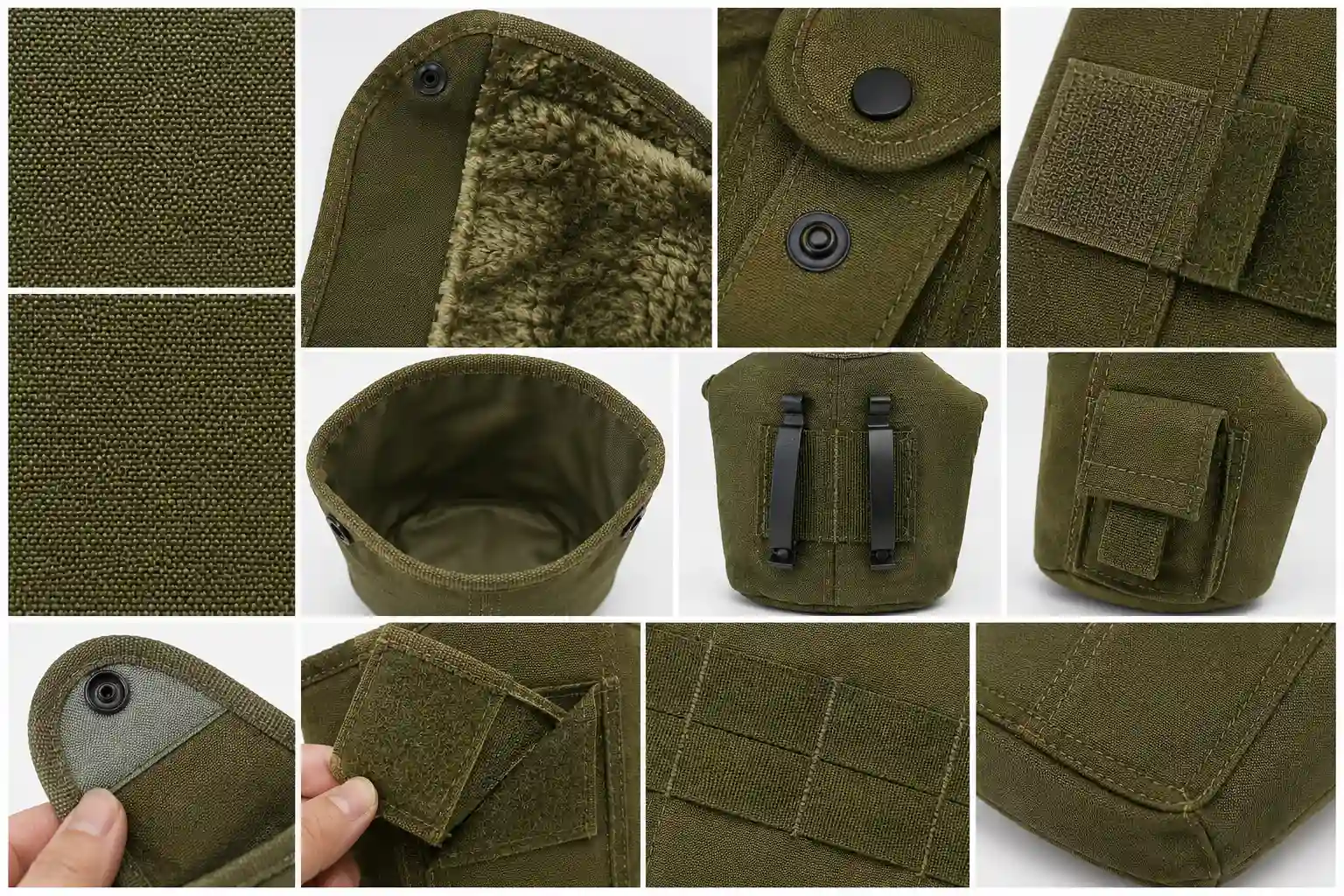
For buyers, the cover should be specified as carefully as the bottle. If your market expects tactical performance, a thin cover without insulation may feel cheap. If your market is price sensitive, an overly complex cover may push the product beyond the target retail price.
6. British Style Water Bottle and Mug Sets
British style water bottle and mug sets are useful when the buyer wants a product that looks different from the classic U.S. canteen.
Typical features may include:
- Oval PE bottle body.
- Matching mug or cup.
- Anti-slip bottle body texture or shape.
- Bottle capacity around 900 ml.
- Mug capacity around 650 ml.
- Stainless steel handle on the cup or mug.
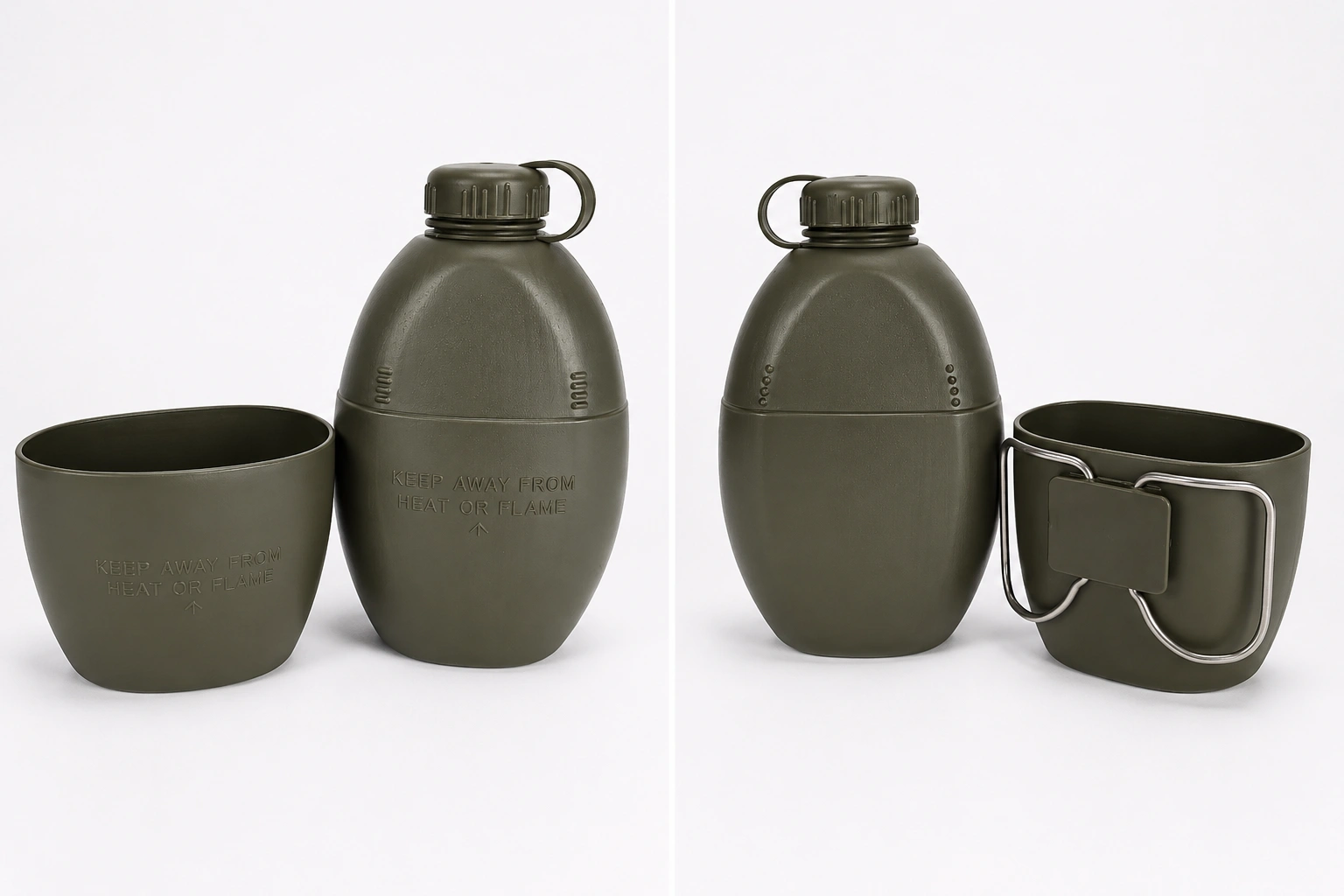
This style can work well for outdoor brands, military surplus suppliers and regional markets where British or Commonwealth-style gear has stronger recognition. It is also useful when a buyer wants a military hydration kit but does not want the standard U.S. canteen silhouette.
7. Metal Canteen Sets: Strong Visual Value, Higher QC Requirements
Metal canteen and cup sets have strong shelf appeal. They are often used for survival kits, vintage outdoor ranges, camping sets and premium military-style bundles.
Common specifications include:
- Aluminum or stainless steel canteen body.
- Matching aluminum or stainless steel cup.
- Plastic cap with silicone gasket.
- Stainless steel chain.
- Capacity around 800 ml.
- Concave or kidney-shaped structure for nesting and grip.
- Individual box or set packaging.
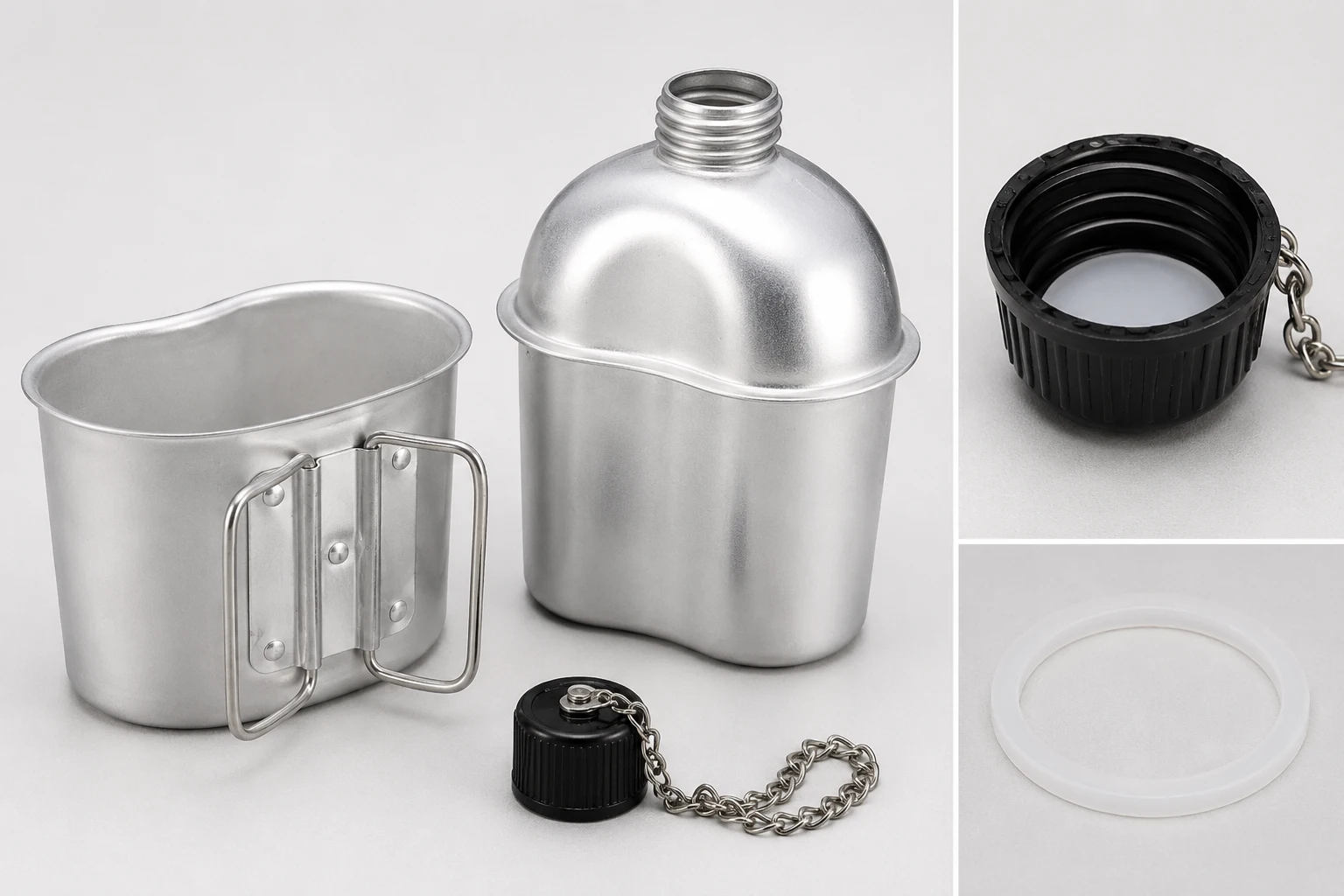
Metal sets require tighter quality control. Buyers should pay special attention to surface scratches, dents, cap sealing, cup edge finishing, chain strength and carton protection. A metal canteen may look excellent in a product photo, but poor packing can cause visible damage during shipping.
8. How to Build a Clear OEM Specification
Before asking for a quotation, prepare a specification sheet. This helps the manufacturer quote faster and reduces misunderstanding.
OEM Military Canteen Specification Checklist
Use this OEM military canteen checklist before asking for a quotation:
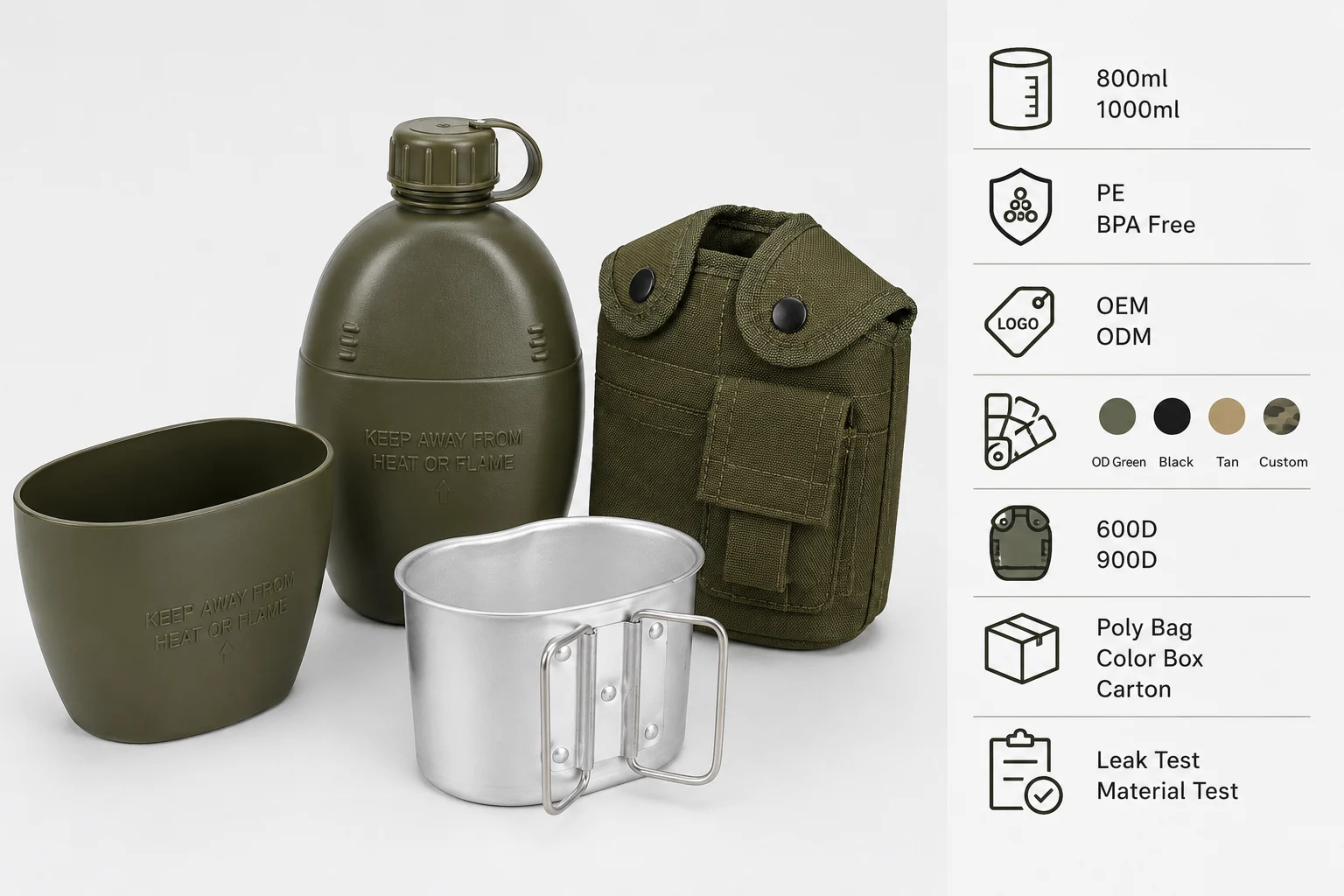
- Product type: U.S. style canteen, British style set, metal set or custom design.
- Bottle capacity: 800 ml, 1000 ml, 920 ml or custom.
- Bottle material: PE, aluminum, stainless steel or other requested material.
- Cup material: aluminum, stainless steel or no cup.
- Cover material: 600D, 900D, nylon, polyester, camouflage fabric or waterproof fabric.
- Insulation: no insulation, standard insulation or fleece insulation.
- Attachment: belt loop, snap button, buckle, hook-and-loop or MOLLE-style.
- Color: olive green, black, khaki, camouflage or custom Pantone color.
- Logo: no logo, printed logo, woven label, embroidery or molded marking.
- Packing: single item, bottle and cup set, bottle plus cup plus cover, individual box or master carton.
The more specific this list is, the easier it is to compare quotations from different suppliers. Without these details, a low quote may simply mean a thinner bottle, lighter cover fabric, lower-grade cup or simpler packing.
9. Quality Control Points for Bulk Orders
For military canteens and cups, quality control should focus on function, fit and appearance.
Recommended QC checks include:
- Bottle leak test after cap tightening.
- Cap thread smoothness and sealing ring fit.
- Bottle weight and wall thickness consistency.
- Cup edge smoothness.
- Cup handle strength and folding movement.
- Bottle and cup nesting fit.
- Cover stitching, button strength and webbing alignment.
- Color consistency across bottle, cover and accessories.
- Logo placement and durability.
- Carton drop and compression protection.
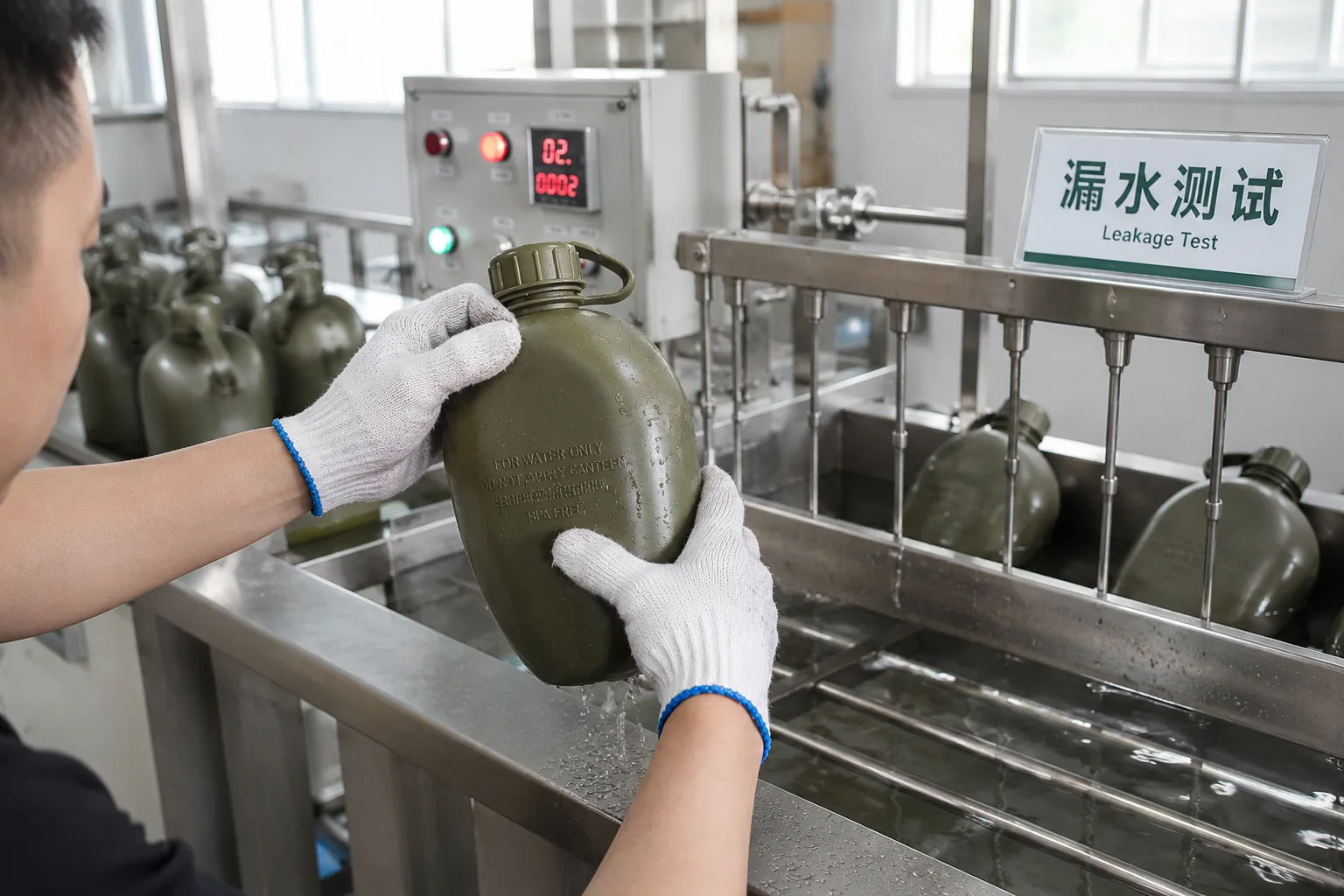
For private label or government-style supply projects, also confirm whether your market needs food-contact compliance, BPA-free documentation, material test reports or packaging labeling requirements.
10. Common Buying Mistakes
The most common mistake is comparing canteen prices without comparing specifications. A bottle-only quotation is not the same as a full canteen kit quotation.
Other common issues include:
- Ordering a canteen and cup that do not nest well.
- Choosing a cover without checking insulation thickness.
- Ignoring cup handle style.
- Using a thin cover fabric for a tactical product line.
- Forgetting carton protection for metal canteens.
- Asking for custom logo after the price has already been confirmed.
- Comparing stainless steel and aluminum cups as if they were the same product.
For B2B buyers, the goal is not always to choose the cheapest option. The goal is to choose the right specification for the expected retail price, buyer type and field use.
11. Which Military Canteen Set Should You Choose?
If you need a practical mass-market option, start with a U.S. style PE plastic canteen, aluminum cup and 600D cover. This gives a recognizable military appearance while keeping weight and cost under control.
If you need a premium outdoor or tactical set, consider a stainless steel cup, stronger cover fabric, better insulation and customized packing.
If you want a differentiated product line, British style bottle and mug sets or metal canteen sets can give your catalog a stronger visual identity.
If you are building a private label project, ask your supplier to confirm fit testing, material options, color matching and carton packing before sampling.
Conclusion
Military canteens and cups are not one-size-fits-all products. For bulk procurement, the best choice depends on the complete system: bottle, cup, cover, attachment method, material, color, packing and quality control.
A good supplier should help you compare these choices clearly instead of only sending a product photo and unit price. If you are preparing a wholesale or OEM project, review your required capacity, material, cover structure and packing method before requesting a quote.
Zennison supplies military canteen bottles, cups, covers and matched hydration kits for bulk buyers and private label projects. Visit our military canteen manufacturer page to explore available options or request a customized quotation.
FAQ
What is the best material for a military canteen?
For lightweight bulk orders, food-grade PE plastic is commonly used because it is durable, cost efficient and suitable for classic military-style canteens. For premium or survival-style products, aluminum or stainless steel canteen sets may provide stronger visual value.
Should I choose an aluminum or stainless steel canteen cup?
Choose aluminum if weight and cost are priorities. Choose stainless steel if you want a stronger, more premium cup. For bulk orders, always compare cup capacity, weight, handle structure and edge finishing, not only material.
What capacity is common for military canteens?
Common military canteen capacities include 800 ml, 1000 ml and around 900-920 ml for some British style bottle sets. The best capacity depends on the market, kit structure and how the bottle nests with the cup and cover.
Can military canteens be customized with a logo?
Yes. Common customization options include printed logo, molded marking, woven label, embroidery on the cover, custom color, private label packaging and carton labeling. The exact method depends on the canteen material and order quantity.
Why does the canteen cover affect the price so much?
The cover includes fabric, insulation, stitching, pocket design, button or buckle type, attachment system and logo work. A 600D basic cover and a 900D insulated tactical cover can look similar online but have very different cost and durability.
What should I confirm before ordering military canteens in bulk?
Confirm the bottle material, capacity, cup material, cover fabric, insulation, color, logo method, attachment system, packing method and quality control standards. Also request samples to test fit, sealing and overall user experience before mass production.