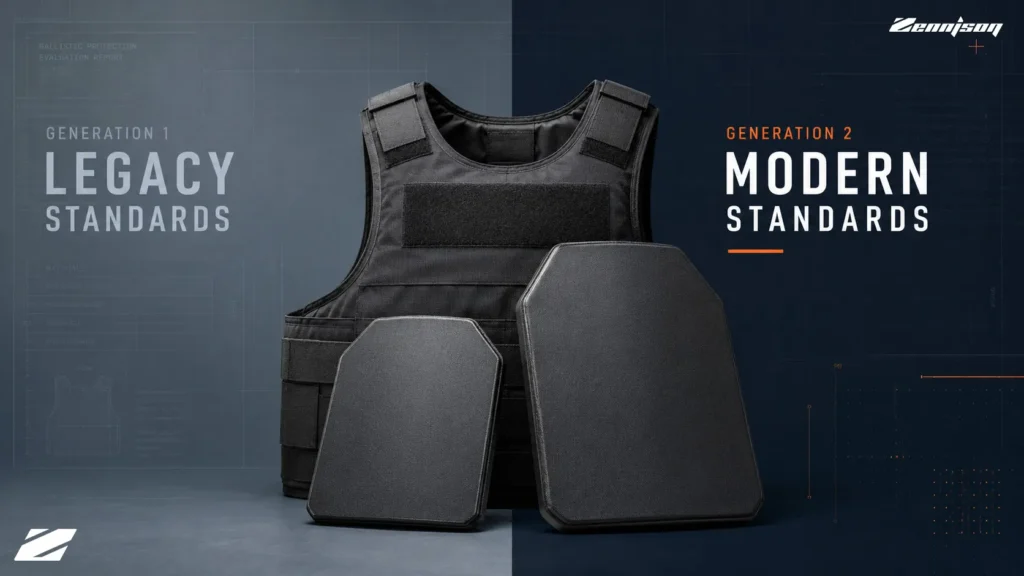
Quick Answer: What Does NIJ 0101.07 vs NIJ 0101.06 Mean for 2026 Buyers?
NIJ 0101.07 vs NIJ 0101.06 is not a simple new-versus-obsolete decision in 2026. NIJ 0101.07 is the current body armor standard and introduces clearer HG/RF level names, broader rifle threat sets, and improved test methods. However, NIJ expects to maintain the 0101.06 Compliant Products List through at least the end of 2029. Buyers should select an exact currently listed model by threat, fit, configuration, status, warranty, and agency policy—not by the standard number alone.
Reviewed July 27, 2026. This buyer guide is educational and does not replace an agency threat assessment, legal review, or verification on the current NIJ Compliant Products List.
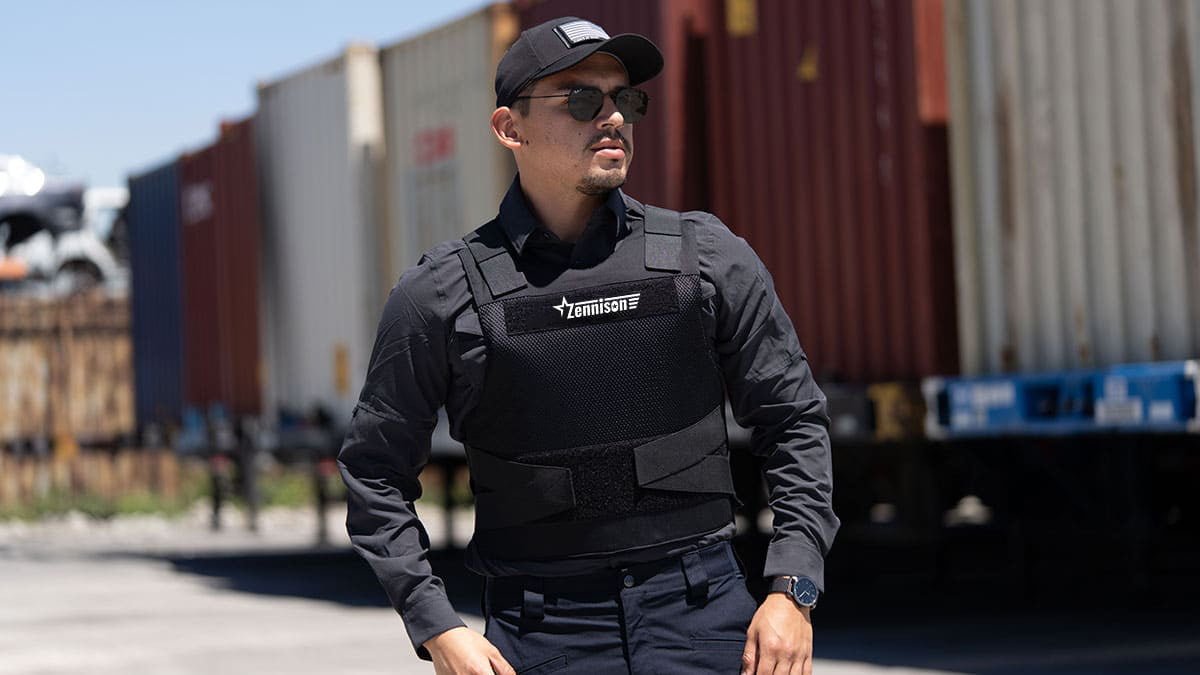
NIJ 0101.07 vs 0101.06 at a Glance
The practical difference begins with how each standard defines protection and challenges armor during testing. NIJ 0101.07 was published in November 2023, and NIJ later released addenda and the initial list of compliant armor. NIJ 0101.06 was published in 2008 but remains relevant during the managed transition.
| Buyer criterion | NIJ 0101.06 | NIJ 0101.07 | 2026 procurement impact |
|---|---|---|---|
| Publication | July 2008 | November 2023, with later addenda | Name the exact standard edition and required level in the RFQ. |
| Handgun levels | IIA, II, and IIIA | HG1 and HG2 | HG means handgun; 0101.07 has no direct IIA successor. |
| Rifle levels | III and IV | RF1, RF2, and RF3 | RF2 is a new defined level that includes the RF1 threats plus M855. |
| Threat document | Threats included in 0101.06 | Threats defined separately in NIJ 0123.00 | A complete requirement must state both 0101.07 and the HG/RF level. |
| Soft armor testing | Established conditioning and P-BFD procedures | Adds a top-center 45-degree oblique shot | The new method challenges an edge location that may behave differently from the center. |
| Curved hard armor | No equivalent crown-shot requirement | Includes a shot at the plate crown | Curved plate geometry receives a more targeted challenge. |
| 2026 listing status | CPL maintained during transition | Initial CPL is live and expanding | Compare exact models across two official lists. |
Source: the National Institute of Justice (NIJ) 0101.07 standard overview and transition guidance, accessed July 27, 2026.
How NIJ Body Armor Protection Levels Map
NIJ provides a naming crosswalk from the old levels to the new HG and RF designations. Treat these rows as orientation, not proof of identical performance. Test threats and procedures changed, so a new label should not be presented as a simple relabeling of an old certificate.
| 0101.06 level | 0101.07 / 0123.00 level | Current NIJ test-threat summary | Buyer note |
|---|---|---|---|
| IIA | No direct successor | Not carried forward as an HG level | Do not substitute a different level without a threat and wearability review. |
| II | HG1 | 9mm FMJ RN at 1,305 ft/s; .357 Magnum JSP at 1,430 ft/s | Closest naming successor, not a statement of identical testing. |
| IIIA | HG2 | 9mm FMJ RN at 1,470 ft/s; .44 Magnum JHP at 1,430 ft/s | Specify HG2 rather than the vague phrase “handgun rated.” |
| III | RF1 | M80 Ball, 7.62x39mm MSC, and 5.56mm M193 | RF1 is broader than the old Level III M80-centered test set. |
| No equivalent | RF2 | All RF1 threats plus 5.56mm M855 | Use when the assessed threats include M855. |
| IV | RF3 | .30-06 M2 AP | Do not assume RF3 alone documents testing against every RF1 or RF2 round. |
The exact projectiles, ammunition identifiers, masses, and reference velocities are published in NIJ Standard 0123.00. Caliber alone is not enough: projectile construction, mass, velocity, and test conditions all influence armor performance.
What Changed Under NIJ 0101.07?
More useful rifle threat sets
The most important buyer-facing change is the expansion from the old Level III M80-centered classification to RF1 and RF2. RF1 covers M80 Ball, M193, and 7.62x39mm mild-steel-core threats. RF2 includes those threats and adds M855. Buyers who previously relied on separate “special threat” reports can now specify a defined NIJ level when RF1 or RF2 matches the risk assessment.
RF3 remains focused on .30-06 M2 armor-piercing ammunition. The number “3” should not be treated as a universal promise that every RF1 and RF2 threat was also part of certification testing. Write the purchase requirement around identified rounds, not a marketing hierarchy.
Improved testing at difficult shapes and shot locations
NIJ 0101.07 adds a top-center soft armor shot at a 45-degree angle of obliquity. It also includes a shot at the crown of curved hard armor plates. For nonplanar soft armor—including shaped designs for female wearers—the standard improves clay support and shot requirements so the armor can be mounted and challenged more consistently.
These changes matter because armor is worn on a moving body rather than as a flat laboratory coupon. Fit trials are still necessary, but the updated methods provide a more relevant performance baseline for shaped panels and curved plates.
Is NIJ 0101.06 Body Armor Still Acceptable in 2026?
Potentially, yes. NIJ says it anticipates maintaining the 0101.06 Compliant Products List through at least the end of calendar year 2029 and advises officers and agencies to keep wearing existing armor during the transition. Publication of 0101.07 is not, by itself, a recall of compliant 0101.06 armor.
An existing or newly offered 0101.06 model still needs due diligence. Confirm that the exact model has an acceptable current status on the official NIJ Compliant Products List, matches the threat assessment, remains within the applicable warranty and replacement policy, fits the wearer, and has no relevant advisory or safety notice.
2026 decision rule: prefer 0101.07 for a new multi-year procurement when a suitable listed model is available, but do not reject an active 0101.06 model solely because its standard number is older.
How Should Buyers Choose Soft Armor, Rifle Plates, and ICW Systems?
New soft armor procurement
Choose HG1 or HG2 from the handgun threat assessment, then compare the exact listed model, coverage, panel shape, size range, thickness, flexibility, heat burden, carrier compatibility, warranty, and replacement support. Review Zennison’s bulk bulletproof vest and body armor options to define the styles and configurations that need supplier documentation.
Run structured wearer trials across representative body types. Certification establishes a test baseline; it does not prove that one cut fits every wearer or that users will wear an uncomfortable vest correctly throughout a shift.
New rifle plate procurement
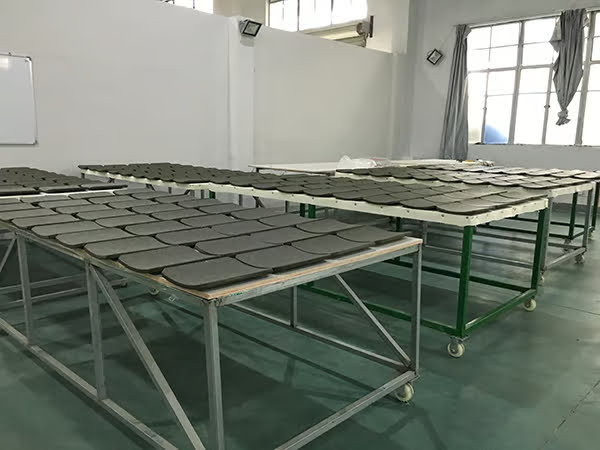
Select RF1 when the defined NIJ threats are M80 Ball, M193, and 7.62x39mm MSC. Select RF2 when M855 is also required. Select RF3 when M2 AP is the specified threat. Then compare plate dimensions, cut, curvature, thickness, weight, coverage, carrier fit, declared multi-hit configuration, warranty, and status.
Zennison’s ballistic plate sourcing page can help buyers identify material, cut, curve, and size questions for an RFQ. Any protection or certification requirement should still be tied to the exact offered model and its supporting record.
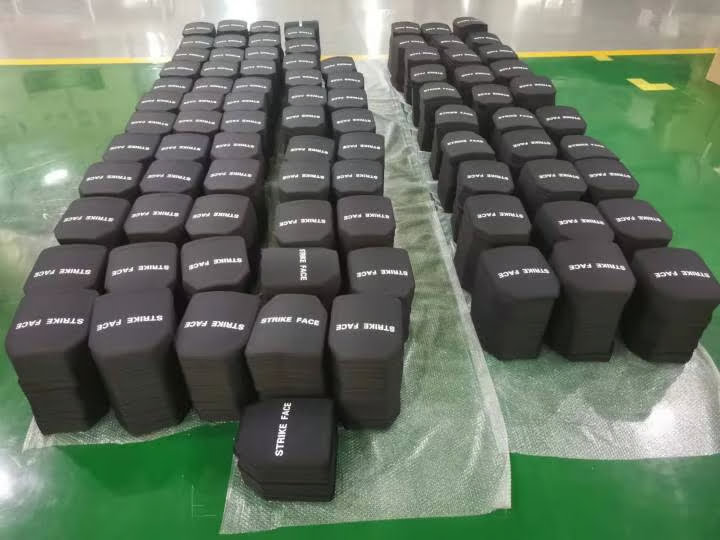
Stand-alone versus in-conjunction-with armor
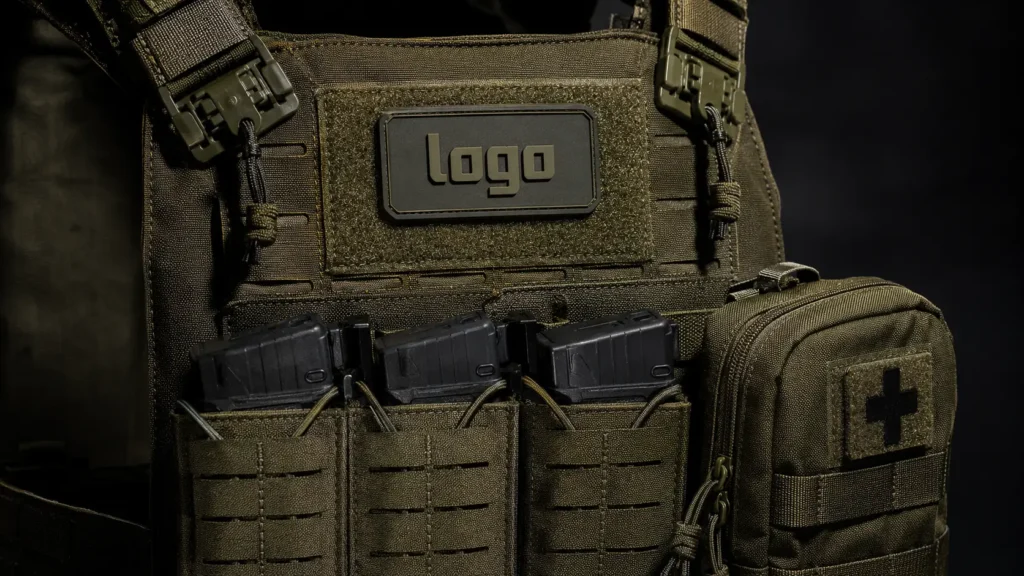
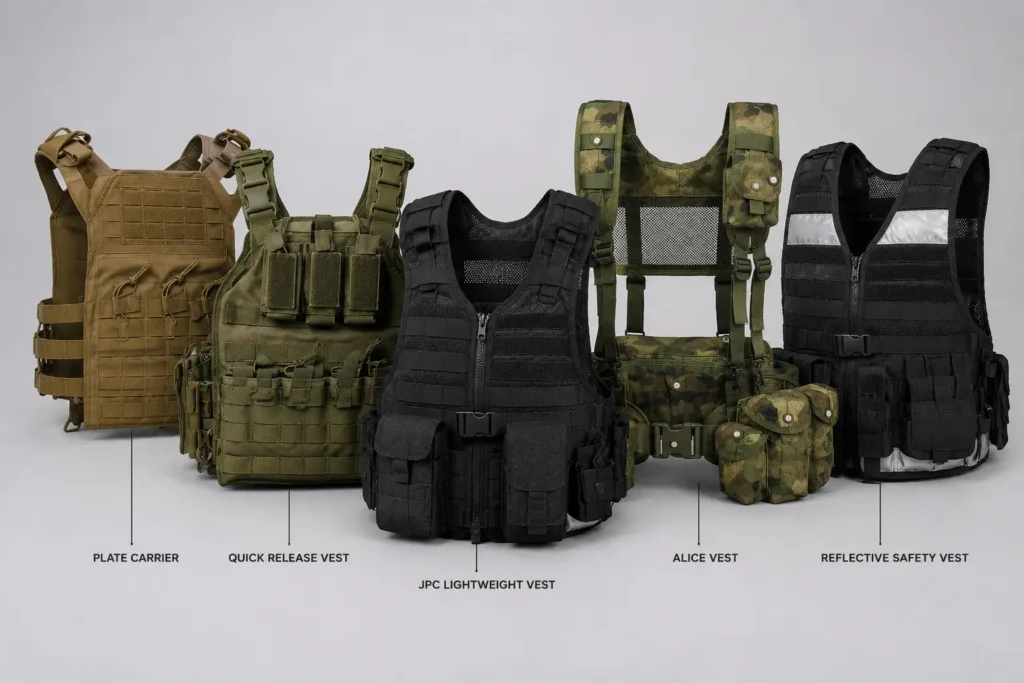
A stand-alone plate is designed to achieve its declared protection without a separate soft armor backer. An in-conjunction-with (ICW) plate achieves its stated protection only with the specific compatible soft armor model or system. Do not mix an ICW plate with an arbitrary panel. Put both exact model designations in the purchase order and check how they fit the carrier. For more equipment context, compare plate carriers and chest rigs before finalizing the load-carriage system.
Body Armor Supplier Verification Checklist
- Request the exact model designation. Do not accept only a brand, series, or marketing name.
- Verify the model on the NIJ CPL. Check the standard, threat level, listed company, model type, warranty, and current status.
- Review advisories and safety notices. Repeat the check at evaluation, award, and delivery.
- Confirm stand-alone or ICW status. For ICW armor, identify the exact required soft armor model.
- Match the delivered configuration. Confirm size, cut, curvature, panel shape, and carrier compatibility.
- Inspect labels and traceability. Review model, serial or lot number, manufacturing location and date, orientation, warranty, warnings, and care instructions.
- Separate certification from test evidence. A report saying “tested to NIJ” is not the same as an active NIJ CPL listing.
- Control substitutions. Require written approval and equivalent verification before accepting a changed model or material.
Copy-Ready Body Armor Procurement Clause
The offered ballistic armor shall be listed on the current National Institute of Justice Compliant Products List under NIJ Standard 0101.07 at protection level [HG1/HG2/RF1/RF2/RF3], including applicable addenda incorporated by NIJ as of the bid closing date. The bidder shall identify the listed company, exact model designation, model type, product status, ballistic warranty, and manufacturing location. For an ICW system, the bidder shall identify and supply the exact compatible soft armor model. The model shall retain an acceptable status at contract award and delivery. Substitutions require written approval and equivalent CPL verification.
If agency policy still permits 0101.06 armor, identify it as an explicitly evaluated alternative. Do not use the unrestricted phrase “NIJ compliant” without naming the standard, level, exact model, and acceptable status.
Common NIJ Body Armor Buying Mistakes
- Treating “tested to NIJ” as NIJ certification: independent testing can be useful, but only the exact current CPL record confirms participation and status in the NIJ program.
- Calling RF1 a renamed Level III: RF1 adds M193 and 7.62x39mm MSC to M80 Ball.
- Assuming RF3 covers every lower-numbered threat: verify additional testing rather than inferring it from the number.
- Checking the CPL only once: product status can change during a long tender and delivery cycle.
- Ignoring fit and coverage: a certified model still needs representative sizing and wearer evaluation.
- Applying 0101.07 to unrelated products: NIJ states that its body armor program covers torso-worn armor, not ballistic backpacks, blankets, or briefcases.
Body armor is ballistic-resistant, not “bulletproof.” Stopping penetration also does not eliminate impact or injury. The National Institute of Standards and Technology explains the controlled backing, shot, conditioning, and deformation principles in its guide to how body armor is tested.
Frequently Asked Questions About NIJ 0101.07 vs NIJ 0101.06
Did NIJ 0101.07 replace NIJ 0101.06?
NIJ 0101.07 is the current performance standard, but 0101.06 products remain in a managed transition. NIJ expects to maintain the 0101.06 CPL through at least the end of 2029, so current model status and buyer policy matter more than the publication date alone.
Is HG2 the same as Level IIIA?
HG2 is the naming successor to Level IIIA, but buyers should not call the standards identical. HG2 uses high-velocity 9mm and .44 Magnum test threats, while 0101.07 also introduces updated shot placements, shaped-armor procedures, and referenced laboratory practices.
Is RF1 the same as Level III?
No. RF1 is the closest nomenclature successor, but it includes M80 Ball, M193, and 7.62x39mm mild-steel-core threats. NIJ 0101.06 Level III certification centered on M80 Ball, so RF1 represents a broader defined test set.
When should a buyer specify RF2?
Specify RF2 when the assessed rifle threats include 5.56mm M855 in addition to the RF1 threats. Confirm that the exact offered armor model is currently listed at RF2 and that its size, curve, cut, weight, carrier, and warranty meet the project requirement.
Is a ballistic laboratory report enough?
A laboratory report can document a specific sample and test condition, but it does not by itself establish NIJ certification. For certified armor, match the exact supplier and model designation to the current NIJ CPL and review the product status and configuration.
Does NIJ 0101.07 certify helmets or ballistic backpacks?
No. NIJ 0101.07 is scoped to ballistic-resistant body armor designed for the human torso. NIJ states that its body armor program does not certify ballistic backpacks, blankets, or briefcases. Other product types require their own applicable standards and evidence.
Conclusion: Build the 2026 RFQ Around Threats and Exact Models
NIJ 0101.07 vs NIJ 0101.06 is ultimately a procurement-control question. The new standard offers clearer levels, broader rifle threat sets, and improved testing, while the older CPL remains part of the official transition. Start with the threat assessment, verify the exact listed model, control the stand-alone or ICW configuration, test fit, inspect labels, and recheck status before delivery.
For a Zennison project review, send your target HG or RF level, wearer size range, soft armor or plate configuration, desired cut and curvature, order quantity, destination market, and required documentation through the Zennison contact page. The team can review the requested configuration; certification and performance must be confirmed for the exact offered model before purchase.